Muyuan is using fermented liquid manure from its pig farms to improve heavily saline-alkali land in Da’an, Jilin province. Through a crop-livestock circular farming model, the company has helped lower soil alkalinity, increase organic matter, reduce chemical fertiliser use, and raise rice yields on once-barren land. The Da’an model shows how livestock waste can become a practical resource for soil restoration and sustainable crop production.
Mention agriculture in Northeast China, and many people will think first of fertile black soil and the country’s great grain basket.
Yet on the edge of that black-soil belt, in the western Songnen Plain straddling Heilongjiang and Jilin provinces, lies several million hectares of heavily saline-alkali land formed by history and climate. It is also one of the world’s three major concentrated areas of soda saline-alkali soil. Da’an, a city under Baicheng in Jilin province, sits in one of the hardest-hit zones.
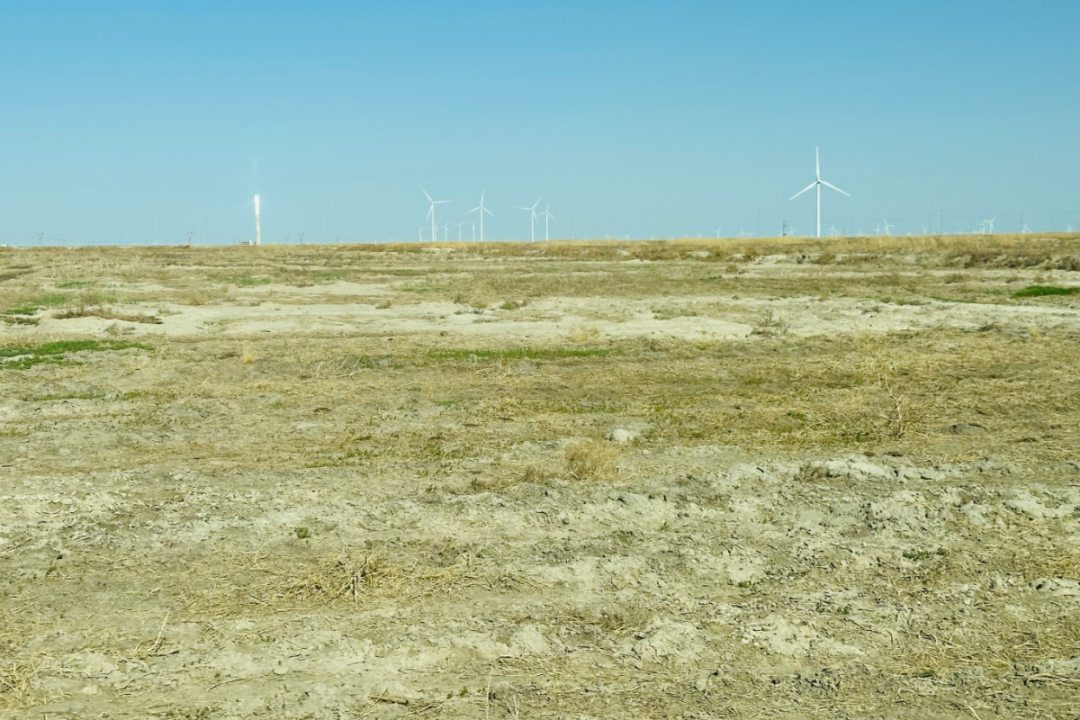
How can this barren land be brought back to life? In recent years, local government, enterprises, universities, and farmers have worked together on a new technical route for improving soda saline-alkali paddy fields. The route is designed to be replicable and scalable. One of the companies involved is pig producer Muyuan Group.
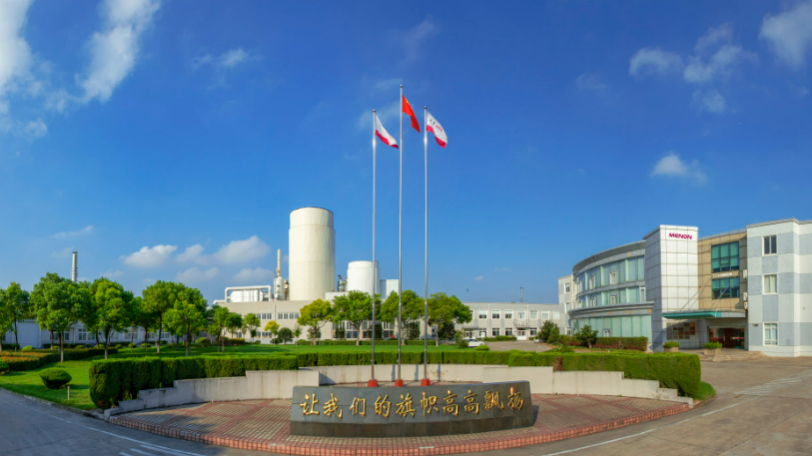
Muyuan entered Da’an in 2019. It has built 3 farms there, with annual capacity for 650,000 commercial hogs. As production started, Muyuan also began crop trials on saline-alkali land around the environmental protection area of its Da’an No. 1 farm, testing ways to improve the soil.
After several years of trials, Muyuan’s solution, built around fermented liquid manure fertiliser, has delivered clear results. Soil pH dropped from a strongly alkaline 10.3 to 8.5 at one stage. Total salt content stabilised at 1‰. Soil organic matter increased from 6.54‰ at the start to about 11‰. Rice yield on land once considered barren rose to about 7.3 tonnes per hectare.
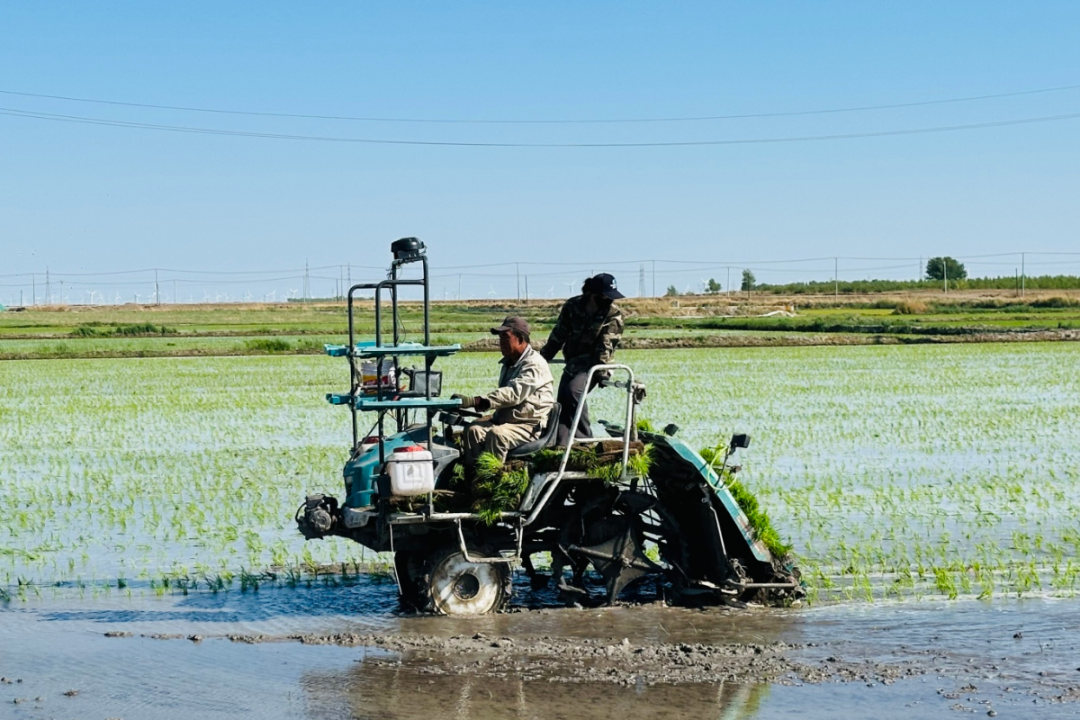
Around Da’an, the area using Muyuan’s liquid fertiliser now exceeds 2,000 ha, including nearly 667 ha of medium-to-heavy saline-alkali land. In effect, Muyuan has opened another door in Da’an’s saline-alkali land improvement: not only “adapting crops to the land”, but also “improving land through livestock”. Livestock waste is being turned from a pollution burden into a green resource.
“We will continue to deepen the promotion and application of the Da’an model, and support leading enterprises such as Muyuan as they make crop-livestock circular farming bigger and better, so that more saline-alkali land can become high-yield farmland,” said a relevant official from the government of Chagan Town, where the Da’an Muyuan farm is located.
How pigs feed paddy fields
At Muyuan’s Da’an No. 1 farm, more than 66.7 ha of surrounding farmland form a crop-livestock circular farming demonstration park. It is divided into 2 main sections: a saline-alkali land remediation research zone and a crop-livestock circular planting demonstration zone.
The research zone sits next to the farm’s environmental protection area. Both are on heavily saline-alkali land. Pig manure and urine from the production area are transported through enclosed pipelines to the environmental protection area. After solid-liquid separation, the solid fraction is processed into raw material for organic fertiliser and sold externally. The liquid fraction undergoes anaerobic fermentation to become a high-quality liquid fertiliser. Muyuan then sends it free of charge to nearby fields through a 286 km pipe network serving farmers within a radius of about 5 km.
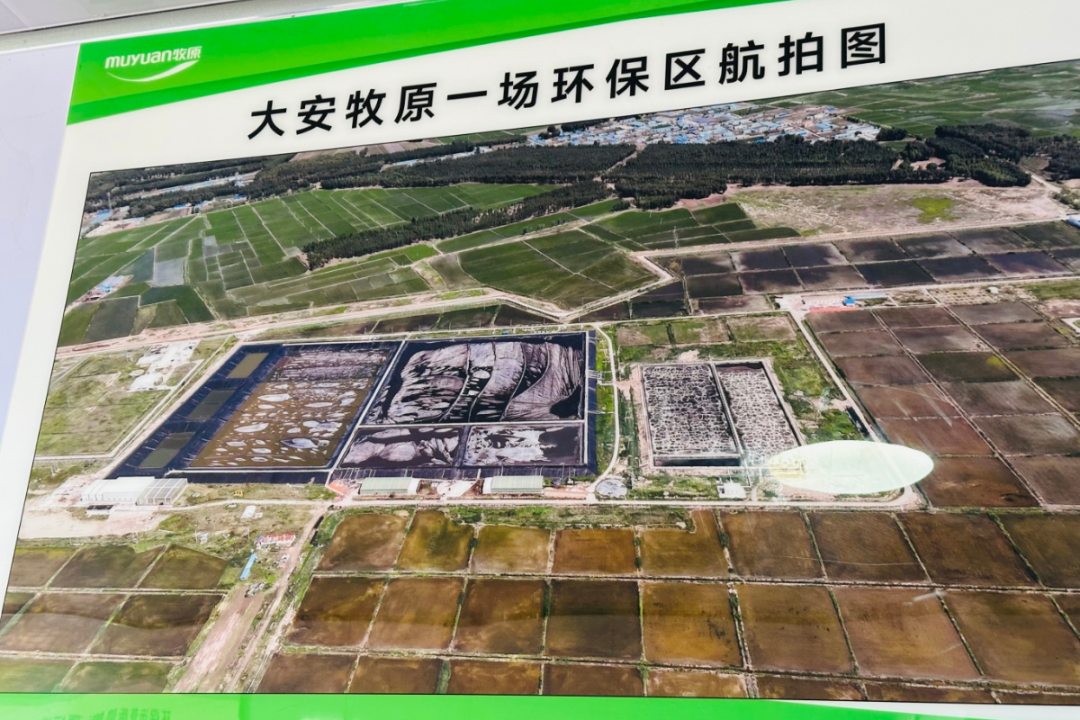
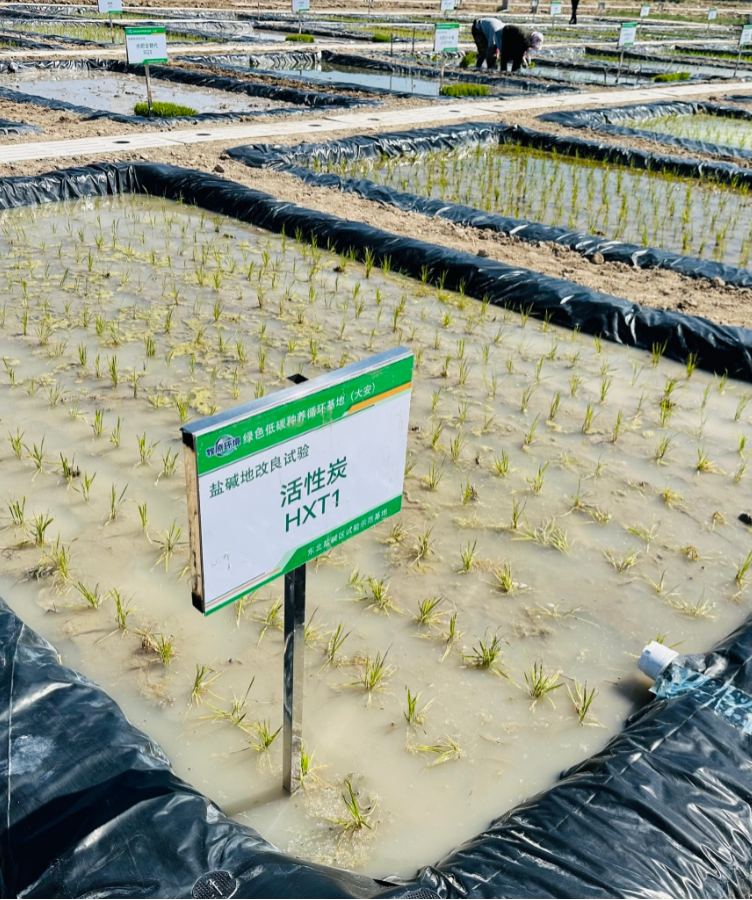
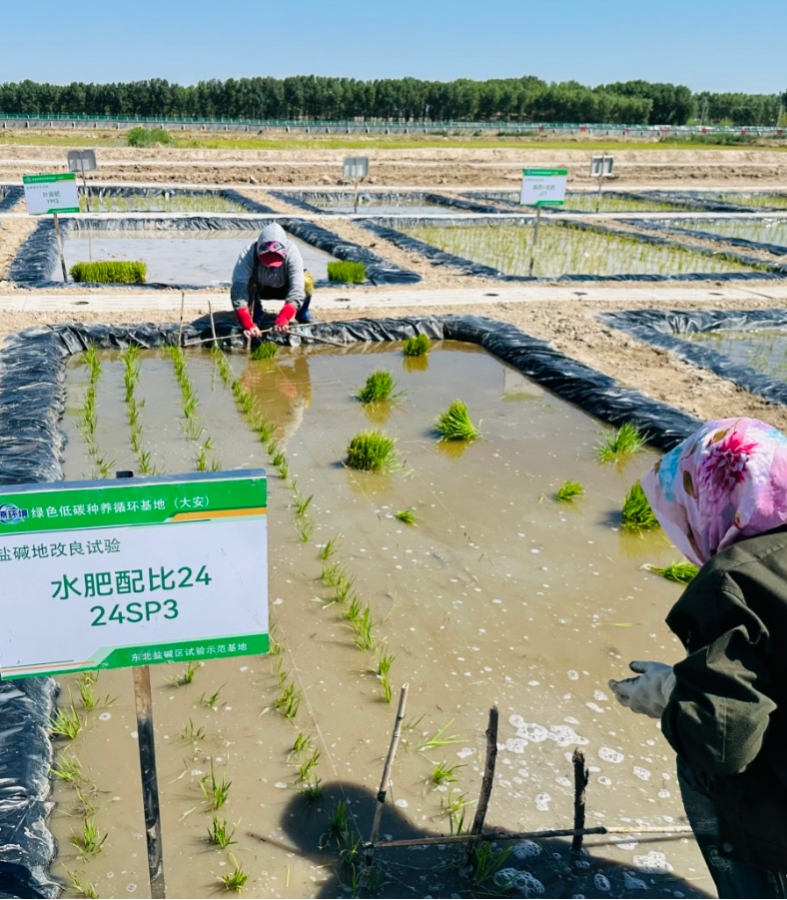
The most eye-catching part of the research zone is a series of small trial plots neatly divided with plastic film. Each plot measures 5 meters by 3 meters. There are 50 in total. Working with a research team from the Chinese Academy of Agricultural Sciences, Muyuan is currently testing saline-alkali-tolerant rice across 17 control groups.
The trials cover physical and chemical improvement plans, including activated carbon plus liquid fertiliser and desulfurised gypsum plus liquid fertiliser. They also include biological approaches such as organic fertiliser plus liquid fertiliser, microbial agents plus liquid fertiliser, and 100% liquid fertiliser replacement. The aim is to keep improving the effect of saline-alkali land remediation.
Successful small-plot treatments are then copied into larger field trials for further validation. Only mature solutions are promoted to growers using Muyuan’s liquid fertiliser. Muyuan agronomists also regularly monitor indicators such as pH and nitrogen, phosphorus, and potassium content in both the liquid fertiliser and the fields where it is applied. The goal is precise control and efficient, rational use.
According to Dang Yabo, an agronomist at Da’an Muyuan, the liquid fertiliser contains nitrogen, phosphorus, potassium, and other nutrients required for plant growth. It can partly, and in some cases fully, replace chemical fertiliser. It also contains trace elements such as calcium, copper, iron, and zinc, as well as active substances including amino acids and humic matter that help improve soil. This, Dang said, can significantly raise soil quality and support greener, more sustainable farming.
Growers see the difference
Wang Xiaohe, a grower from Xianfeng Village in Chagan Town, has seen the change firsthand. When he returned home to farm in 2021, one of his heavily saline-alkali paddy fields of about 3 ha produced just over 2.5 tonnes of paddy rice. That meant a yield only a little above 0.75 tonnes per hectare.
The following year, with little to lose, he tried Muyuan’s liquid fertiliser. The same land rose to about 6 tonnes per hectare.
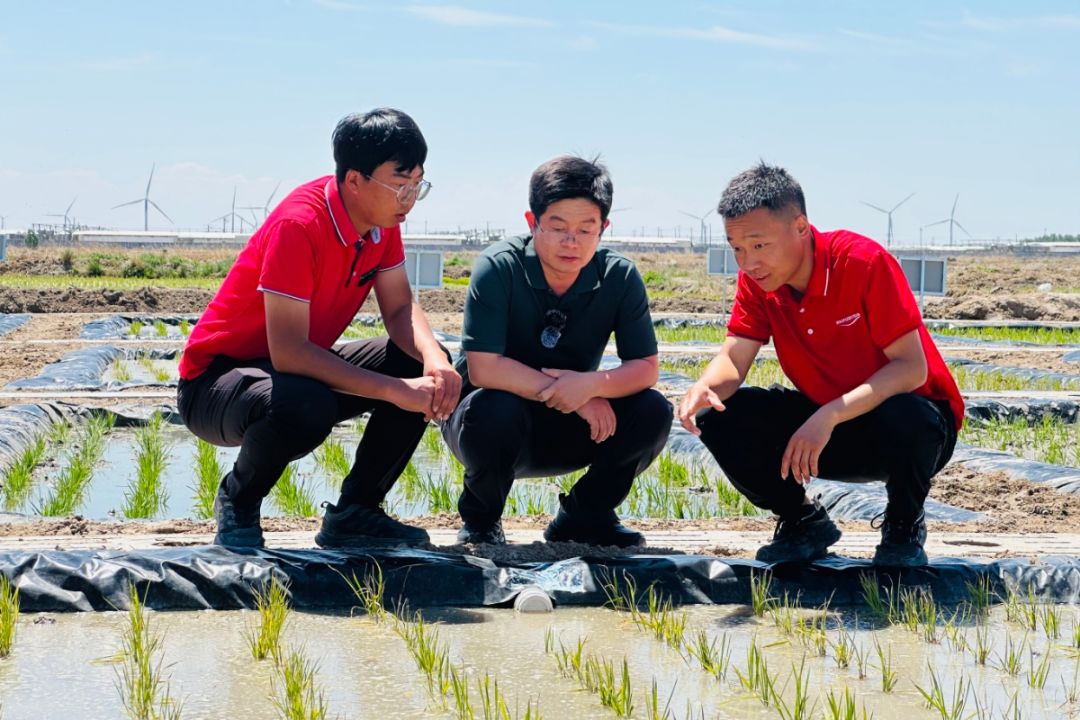
Dang Yabo (right), his colleagues, and experts from the Chinese Academy of Agricultural Sciences inspect the trials, with a Muyuan pig farm in the background.
Wang now grows 43 ha of rice, all using Muyuan’s liquid fertiliser. Of that area, 25 ha used to be saline-alkali land. Last year, the former saline-alkali fields reached 7 tonnes per hectare. His target is to gradually reach 9 tonnes per hectare, the level of normal farmland.
He has also calculated the economics. With free Muyuan liquid fertiliser now widely used, he has cut chemical fertiliser use by 50%. That reduces input costs by about CNY 1,600 (USD 222.84) per hectare. Paddy yield has increased by an average of around 750 kg per hectare, bringing total additional income close to CNY 4,000 (USD 557.10) per hectare.
“Compared with before we used the liquid fertiliser, soil compaction has also been effectively improved,” Wang said.
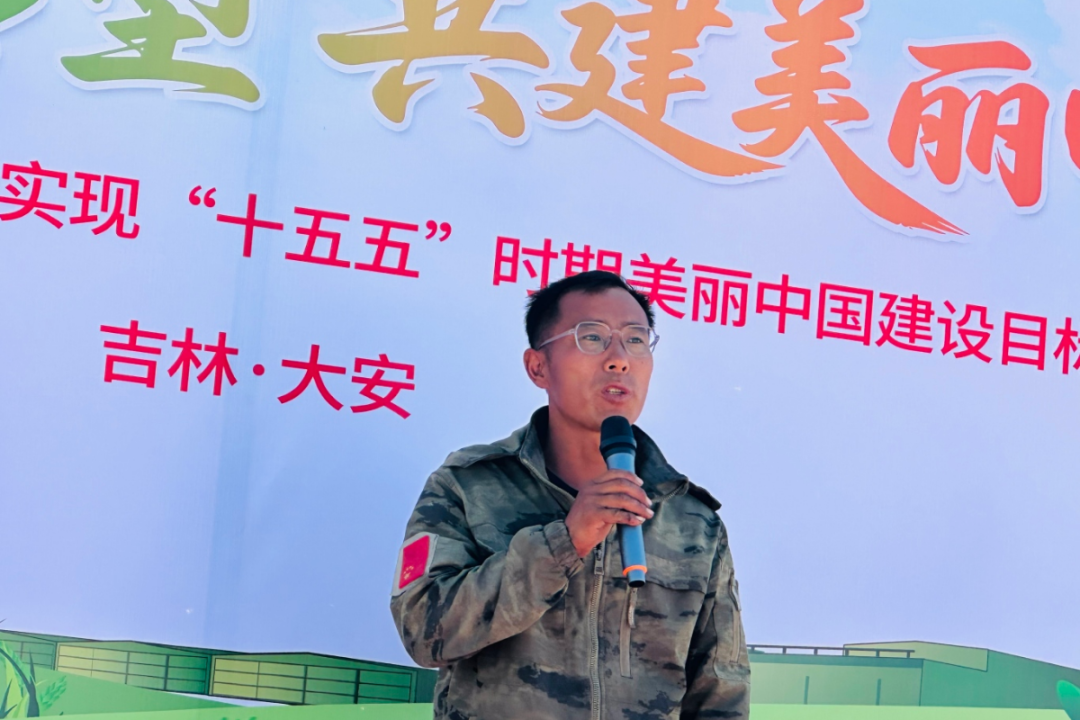
Wang Xiaohe
Confidence in the liquid fertiliser is spreading. Zhao Yongzhi, a large-scale grower originally from Suqian in Jiangsu province, contracted 120 ha of saline-alkali land this year. He did not use any chemical fertiliser as base fertiliser, saving more than CNY 200,000 (USD 27,855.15) in one go.
“Before, nobody wanted saline-alkali land even if it was given away. Now people are willing to pay for it,” several large-scale growers said.
After continuous improvement with Muyuan’s liquid fertiliser, rent for saline-alkali cultivated land has risen from about CNY 1,000 (USD 139.28) per hectare 2 or 3 years ago to CNY 3,000–4,000 (USD 417.83–557.10) per hectare today. Like the liquid fertiliser itself, the land is starting to be in short supply.
Beyond Da’an
Across China, the scale of the challenge is vast. According to the latest report from the Centre for Cultivated Land Quality Monitoring and Protection and Farmland Engineering under the Ministry of Agriculture and Rural Affairs, China has about 100 million ha of saline-alkali land. Around 33.3 million ha has potential for development and use.
During an inspection visit to Dongying, Shandong province, in October 2021, President Xi Jinping stressed that the comprehensive use of saline-alkali land is of strategic importance for safeguarding national food security and keeping China’s rice bowl firmly in its own hands. At the second meeting of the 20th Central Financial and Economic Affairs Commission in July 2023, Xi further called for fully tapping the development and utilisation potential of saline-alkali land, strengthening the improvement of existing saline-alkali cultivated land, effectively curbing the trend of salinisation, steadily expanding agricultural production space, improving overall agricultural production capacity, and developing characteristic agriculture on saline-alkali land.
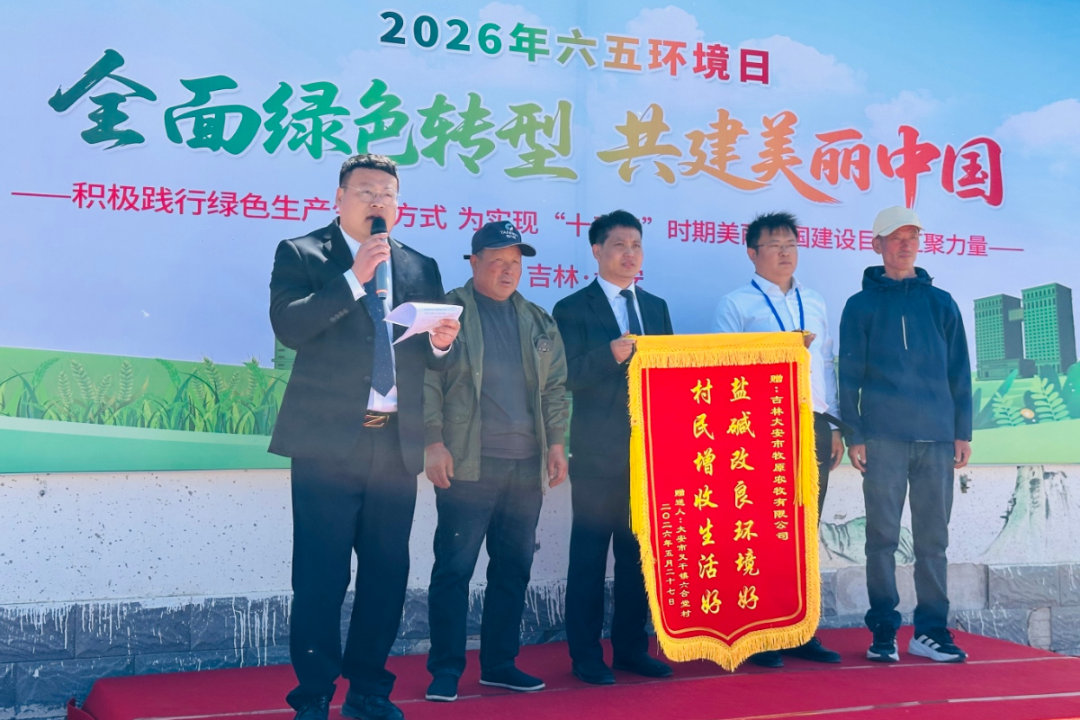
Ahead of this year’s World Environment Day, Zhao Yongzhi (second from left), representing large-scale growers, presents a silk banner to Da’an Muyuan.
Muyuan, a leading pig producer with operations in more than 200 counties across 24 provinces and regions, is applying its green development approach through environmental technologies and circular farming models. Its aim is to activate saline-alkali land resources and allow local communities to share the benefits.
In 2025, Muyuan’s crop-livestock circular farming services covered about 328,600 ha of farmland and replaced 125,600 tonnes of chemical fertiliser. Cumulatively, the company has improved more than 20,000 ha of saline-alkali land across China, including about 2,468 ha of extremely severe saline-alkali land and about 1,701 ha of heavy saline-alkali land.
The model has been applied to rice, wheat, maize, sorghum, soybean, and other suitable crops, covering provinces including Heilongjiang, Jilin, Shanxi, Shandong, Jiangsu, Henan, and Hebei. Muyuan describes the approach as “pigs feed fields, fields feed pigs”. For agricultural ecological development, it provides a model that can be copied.

Muyuan’s contribution to green development also brought its founder, Qin Yinglin, onto the stage at China Media Group’s 2026 China ESG Gala in April 2026 as the only representative from an agricultural enterprise. Qin brought a symbolic Chinese character: “家”, meaning home. It carried the idea that pigs and grain help secure the world. The upper part was filled with rice, and the lower part with soil. The soil came from Da’an’s saline-alkali land. The rice had grown from what was once barren ground.
AgriPost.CN – Your Second Brain in China’s Agri-food Industry, Empowering Global Collaborations in the Animal Protein Sector.