ST Longda is moving to launch an out-of-court restructuring as it faces pressure to repay maturing convertible bonds and manage rising debt risks. The company is also recruiting restructuring investors to provide funding, industrial support, and operational assistance.
As the maturity date approaches for a convertible bond worth nearly CNY 1 billion (USD 139.28 million), ST Longda, an integrated hog company facing the risk of being unable to repay principal and interest on schedule, has put forward a new option: start with an out-of-court restructuring.
An out-of-court restructuring refers to a process in which a company has not yet entered judicial bankruptcy proceedings, but independently negotiates with creditors, shareholders, potential investors, and other parties through market-based means. The aim is to agree on debt repayment, adjustments to creditor claims, the introduction of new funding, and other arrangements, so that debt risk can be resolved and the company’s ability to continue as a going concern can be restored.
As Longda put it, an out-of-court restructuring is based on voluntary negotiations between all parties. It does not carry the compulsory force of a judicial process, but it can reduce restructuring costs and improve efficiency.
In practical terms, it allows basic work to begin earlier: creditor claims can be filed and reviewed, assets can be investigated and valued, and communication with creditors can start. It also gives the company room to negotiate more fully with creditors, intended restructuring investors, and other interested parties, to understand their views on the restructuring, assess the company’s restructuring value, and judge whether a pre-restructuring process, if needed, and a formal restructuring process can follow.
In other words, Longda is treating out-of-court restructuring as a step before judicial restructuring. The idea is to combine the efficiency of market negotiations with the protection of judicial procedures. Much of the detailed negotiation and due diligence can be completed outside court, after which the court could quickly initiate a judicial restructuring process and lock in a rescue plan in accordance with the law. That would buy the company valuable time to restore its own cash-generating capacity.

AgriPost understands that, if all parties reach agreement smoothly, a company carrying out an out-of-court restructuring may not need to enter a formal restructuring procedure at all. It could directly implement the restructuring plan, saving time and costs. The company would also avoid the “bankruptcy” label, reducing reputational risk.
That differs from previous hog industry restructurings. Zhengbang and Aonong, both of which have completed restructurings, entered the process after they became unable to repay debts and creditors applied to the court for pre-restructuring. The court then accepted the applications, appointed administrators, recruited investors, drew up restructuring plans, secured majority creditor approval, obtained court approval, and implemented the plans until completion.
Judicial restructuring usually takes time. Zhengbang took about 14 months from the start of pre-restructuring to full completion. Aonong, regarded as a benchmark for restructuring efficiency among hog companies, still spent more than 10 months on the process. Another pig company, TechBank, has gone through 4 extensions since launching pre-restructuring in August 2024 and has still not moved into formal restructuring.
Longda’s immediate pressure
The urgent task for ST Longda is the repayment of a convertible bond due on July 12, 2026. In July 2020, the company publicly issued 9.5 million convertible corporate bonds, each with a par value of CNY 100 (USD 13.93), raising a total of CNY 950 million (USD 132.31 million).
As of July 2, 2026, more than 7.49 million “Longda Convertible Bonds” had not been converted into shares. The maturity redemption price is CNY 115 (USD 16.02) per bond, including tax and the final interest payment. That means Longda needs to prepare about CNY 860 million (USD 119.78 million) for debt repayment.
“At present, the company’s current cash balance is expected to be insufficient to cover the principal and interest due on the ‘Longda Convertible Bonds,’ and there is a significant risk that the company will be unable to repay principal and interest on schedule,” Longda stressed.

There has been some movement. According to the company’s latest announcement on July 7, the number of unconverted “Longda Convertible Bonds” had fallen to about 6.99 million as of July 3. That means about 500,000 bonds were converted into shares in 1 day, reducing the corresponding repayment amount by nearly CNY 60 million (USD 8.36 million). The last conversion date for the bonds is July 10.
At the same time, the bonds showed abnormal volatility. Over the 3 trading days of July 2, July 3, and July 6, 2026, the cumulative increase in the closing price of the “Longda Convertible Bonds” reached 30.38%. The final trading day is July 7. As of July 6, the bond price stood at CNY 81.96 (USD 11.42) per bond, while the conversion value was CNY 75.3846 (USD 10.50) per bond, implying a conversion premium of 8.72%.
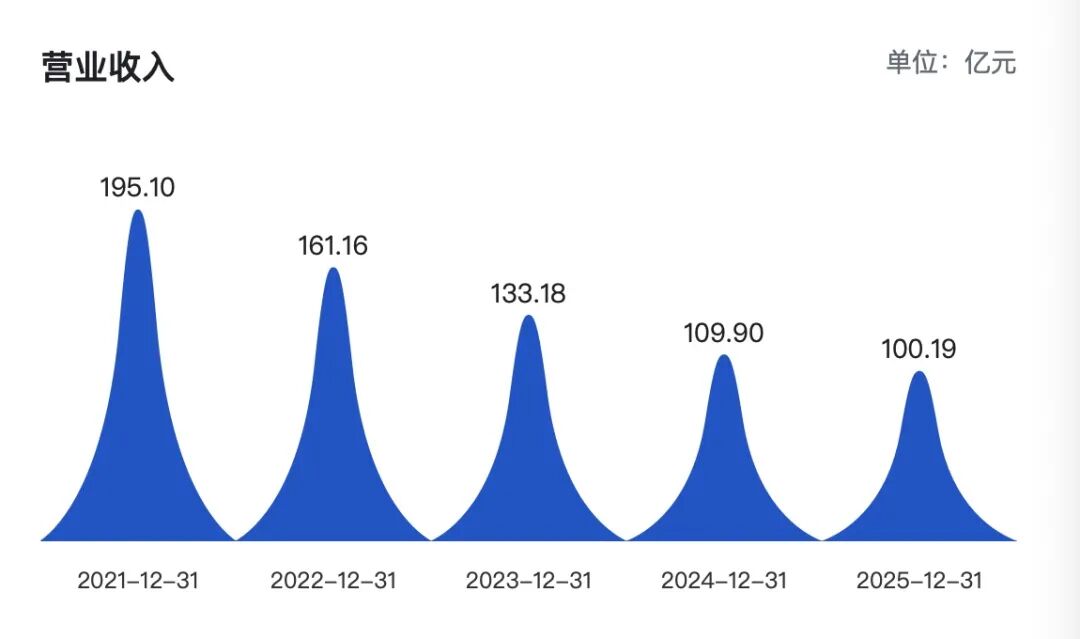
Longda’s operating income has declined year by year over the past 5 years, nearly halving from about CNY 19.5 billion (USD 2.72 billion) in 2021 to about CNY 10 billion (USD 1.39 billion) in 2025. Its net profit was also mostly negative during the period, including a loss of CNY 1.562 billion (USD 217.55 million) in 2023 and a loss of CNY 736 million (USD 102.51 million) in 2025.
By the end of the first quarter of 2026, Longda’s total assets had fallen to CNY 4.535 billion (USD 631.62 million), including only CNY 230 million (USD 32.03 million) in cash. Its liability-to-asset ratio was around 85%.
The pressure has been compounded by a debt crisis at its controlling shareholder, Lanrun Group(蓝润集团), which is mainly engaged in real estate. After Lanrun’s debt crisis erupted, part of its shareholding was pledged, frozen, and even auctioned. Dai Xuebin, chairman of Lanrun Group and Longda’s actual controller, was also placed under criminal detention in May 2026.
Longda recently told a private equity fund during a research meeting that the company remains independent from its controlling shareholder and actual controller in assets, business, and finance. It said the detention of the actual controller had not had an adverse impact on daily operations. Production, sales, and other operating activities remain normal, the board of directors is operating as usual, senior executives are performing their duties normally, and employee wages are being paid as normal.
The meeting also revealed that Longda has maintained good cooperation with financial institutions. The company is currently controlling liquidity risk by strengthening budget management, increasing collection of receivables, and improving internal financial controls. Its board also remains open to due diligence and contact from industrial institutions.
Investors being recruited
Alongside the announcement that it would first implement out-of-court restructuring, Longda also released a notice on the public recruitment and selection of restructuring investors.
The notice stated that, to properly address the company’s operating difficulties and debt crisis, and to prevent further deterioration in debt and operating risks, Longda would first carry out an out-of-court restructuring. The company’s pre-restructuring/restructuring liquidation team will serve as the working group for pre-restructuring and restructuring, as well as the supporting body for the out-of-court restructuring.
Under the supervision and guidance of that supporting body, Longda will recruit restructuring investors, negotiate with relevant parties, and formulate an out-of-court restructuring plan.
The purpose of the recruitment is to bring in qualified restructuring investors that can support the company in industrial empowerment, funding, operational management, and business development.
The notice also made clear that the public recruitment and selection of restructuring investors during the out-of-court restructuring period will remain valid into Longda’s restructuring procedure. Barring special circumstances, the company will not conduct a separate selection of restructuring investors after it formally enters restructuring.
The investors being recruited are mainly divided into 2 categories: industrial investors and financial investors. They are required to pay deposits of CNY 30 million (USD 4.18 million) and CNY 10 million (USD 1.39 million), respectively. Interested investors must complete registration by July 20, although after the deadline the supporting body has the right to decide whether to extend the registration period.
AgriPost.CN – Your Second Brain in China’s Agri-food Industry, Empowering Global Collaborations in the Animal Protein Sector.