Boen Group says its planned acquisition of 3 CJ feed companies will add production bases in Shenyang, Tianjin, and Liaocheng, filling its northern China capacity gap and helping it enter the fast-growing ruminant feed sector. The deal would complement Boen’s core pig feed business, while the company continues to focus on high-value feed segments, poultry and ruminant expansion, synthetic biology, and feed additives rather than downstream farming.
Boen Group said its planned acquisition of 3 feed companies under CJ would help the company quickly enter the emerging growth track of ruminant feed, while also strengthening its national production footprint.
The company received institutional investors on June 5 in a meeting led by Chairman Zou Xinhua. During the session, Boen responded to questions about how the proposed acquisition would affect its capacity layout and business structure.

According to Boen, completion of the deal would add 3 production bases in Shenyang, Tianjin, and Liaocheng, directly filling a gap in the northern market and creating a more coordinated national capacity network across northern and southern China. In terms of product mix, the target companies mainly produce ruminant feed, including beef cattle feed and dairy cow feed. This would complement Boen’s existing core pig feed business and support a quicker move into ruminant nutrition.
The tentative transaction price for the CJ assets is CNY 125 million (USD 17.41 million). Boen said the funds would come from its own resources or self-raised capital. As of the end of the first quarter of 2026, the company still held around CNY 255 million (USD 35.52 million) in cash and monetary funds, with interest-bearing debt of CNY 317 million (USD 44.15 million).
“The company is currently in a period of strategic expansion and will consider various financing methods based on future business development and capital expenditure needs,” Boen said.
In the first quarter of 2026, Boen reported operating revenue of CNY 345 million (USD 48.05 million), up 20.52% year-on-year. Net profit attributable to shareholders reached CNY 9.15 million (USD 1.27 million), a year-on-year increase of 278.79%, taking the company back into profitability.
Boen attributed the improvement in earnings to 3 main factors: economies of scale brought by revenue growth, initial results from cost control, and easing pressure from fixed-cost allocation as new factory capacity ramped up. In the first quarter, its 3 main expenses — selling, administrative, and financial expenses — totaled CNY 32.44 million (USD 4.52 million), accounting for 9.41% of revenue and down 23.51% year-on-year.
Why Boen is focusing on niche feed segments
Boen said its decision to focus on segments such as front-end feed and layer feed is based on the higher technical barriers, higher added value, and stronger customer sensitivity to quality and service in these areas compared with price alone.
Compared with bulk compound feed, front-end feed — including creep feed and sow feed — is directly linked to piglet survival rates and sow reproductive performance, Boen said. Customers are therefore willing to pay a premium for better results. Layer feed, meanwhile, directly affects egg production rate and egg quality, with the extension of the peak laying period having a significant impact on farm profitability.
The company said it has built differentiated advantages in these segments through capabilities including synthetic biology and fermentation technology, helping it avoid homogeneous competition in the low-margin bulk feed market.
In 2025, Boen’s poultry feed sales revenue reached CNY 145 million (USD 20.19 million), up 233.64% year-on-year, making it an important driver of revenue growth.
Boen also stressed that it does not intend to extend downstream into farming. The company said feed and farming operate under different business logic, while farming is more exposed to cyclical volatility and higher risks. Maintaining a “no pig farming” strategy also helps Boen avoid competing with its customers.
Balancing focus and growth
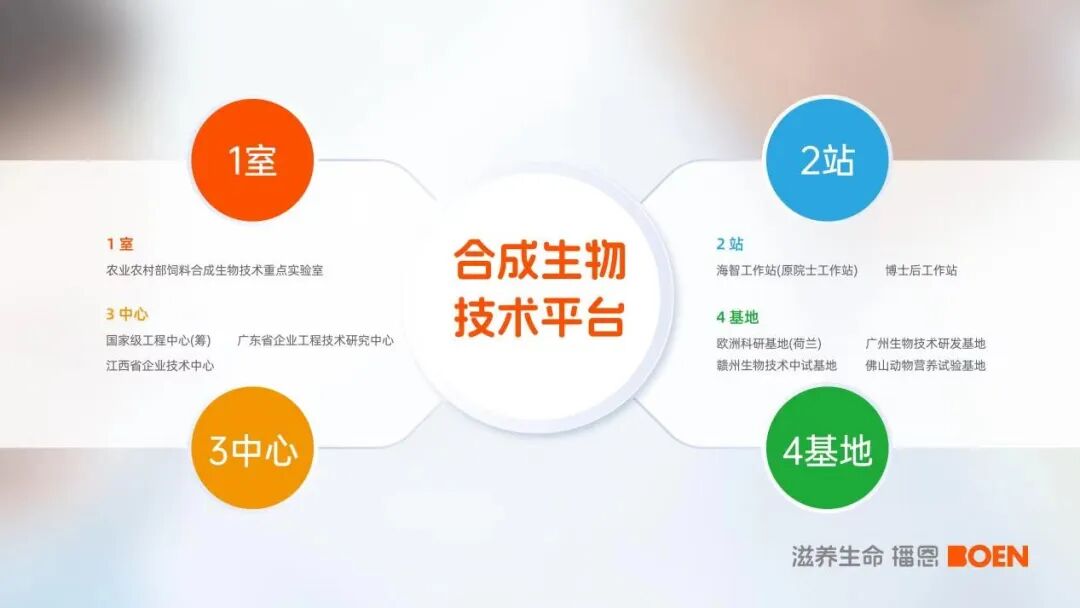
To balance focus with growth, Boen said it will follow 3 paths. First, it will continue to deepen its position in high-value-added integrated sow-and-piglet products within pig feed. Second, it will expand into non-pig categories, including poultry feed and ruminant feed, to offset volatility in the hog cycle. Third, it will move upstream into synthetic biology and feed additives to strengthen its technical barriers.
On global expansion, Boen said it has formulated a “333 strategy,” under which the China market, other Asian markets, and markets outside Asia would each account for around one-third of the business.
The company has already started exploring international opportunities. In 2026, it signed a strategic cooperation agreement with a well-known international grain trader, covering animal nutrition technology research and development, supply chain coordination, and digital innovation. A leading integrated food and agriculture enterprise group from Southeast Asia also visited Boen for inspection and exchanges.
The 2 international companies referred to by Boen are understood to be Louis Dreyfus, one of the “big 4” global grain traders, and the Philippines’ Aboitiz Food Group. However, Boen noted that it is still in the exploration and accumulation stage of internationalisation and has not yet made substantive overseas investments.
AgriPost.CN – Your Second Brain in China’s Agri-food Industry, Empowering Global Collaborations in the Animal Protein Sector.