Muyuan aims to push hog production costs below CNY 10/kg (USD 1.39/kg) while sharing its technical and management experience with the wider industry through a new industrial connectivity platform. The company sees further room for cost reduction through health management, breeding, smart technologies, and better production management. It also reported improving results in slaughter and meat business, ongoing overseas expansion, and early work on an AI-based pig-farming large model.
Muyuan is aiming to push its hog production costs below CNY 10.00/kg (USD 1.39/kg), while turning its accumulated know-how into a service platform for the wider industry.
The Chinese pig producer outlined the ambition at its 2025 annual shareholders’ meeting on May 13. According to minutes disclosed by the company, Muyuan will continue to focus on its core pig business, improve production indicators, and look for a further CNY 600 (USD 83.57) in cost-reduction potential per finisher. That work will centre on health management, production management, and breeding.

At the same time, Muyuan said it intends to build an industrial connectivity platform, using the technical experience it has accumulated over years of development. Through that platform, the company wants to offer services externally, share its experience with society, help farmers that need support improve their farming capabilities, and contribute to a healthier, more stable industry.
The company said the operating environment has changed substantially. China’s pig industry is becoming more mature, the level of scale farming continues to increase, and hog price fluctuations are narrowing. In addition, the government is adjusting production capacity in the hog sector according to supply, demand, and hog prices.
“The company’s development has benefited from strong support from the government and all sectors of society,” Muyuan said. “Against the current background of capacity regulation, the company will continue to actively respond to, and implement, the government’s call, seize development opportunities, and proactively adjust its future development direction.”
01 Cost reduction path
Muyuan said that, excluding the impact of feed raw material prices, it has already achieved more than half of the CNY 600 (USD 83.57) cost-reduction potential it previously identified. It still sees room to cut costs by about CNY 2.00/kg (USD 0.28/kg).
The picture differs across farms. The company’s best-performing lines are already below CNY 10.50/kg (USD 1.46/kg), while some lines are still above CNY 12.00/kg (USD 1.67/kg), or even CNY 13.00/kg (USD 1.81/kg).
Muyuan said its average full hog production cost in 2025 was about CNY 12.00/kg (USD 1.67/kg). For this year, the company has set a target of reducing that figure to below CNY 11.50/kg (USD 1.60/kg).
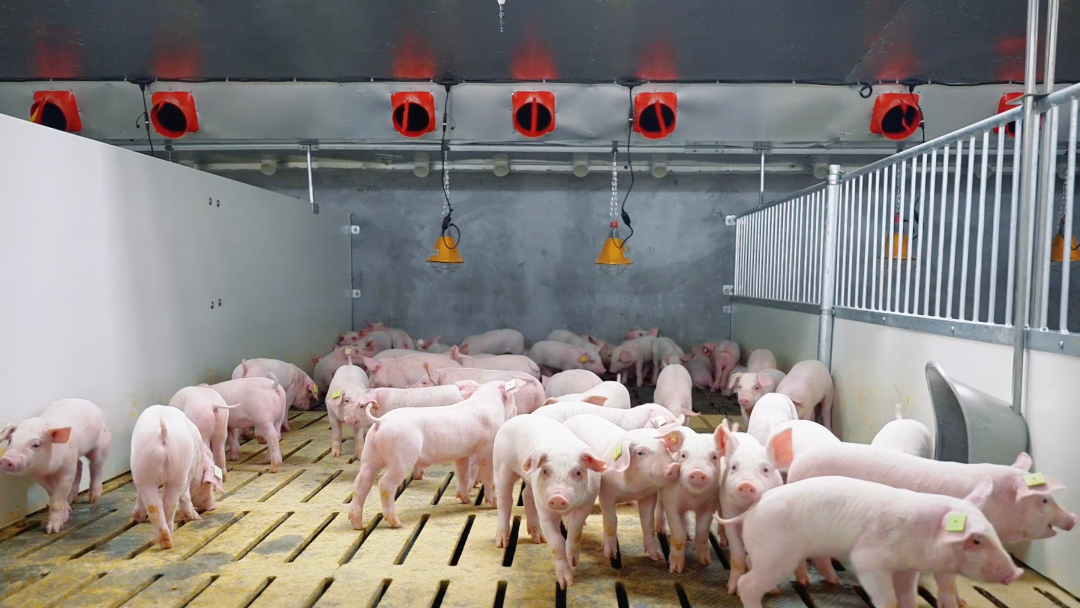
Qin Jun, Muyuan’s board secretary, previously told AgriPost that when the company first proposed the CNY 600 (USD 83.57) cost-reduction target in May 2022, its pig production cost was about CNY 16.00/kg (USD 2.23/kg). Calculated on a finisher of about 120 kg, that implied a long-term cost target of around CNY 11.00/kg (USD 1.53/kg). With feed raw material prices moving since then, Muyuan is now setting itself a tougher efficiency target.
The company summarised its cost-reduction route in 4 areas: continuing to implement disease prevention and control technologies; optimising incentives for employees and managers; increasing investment in breeding; and strengthening the research, development, and application of smart technologies.
Breeding is expected to play an important role. Muyuan said that since 2023, the performance of its breeding pigs has improved significantly, helping improve Average daily gain (ADG), Feed conversion ratio (FCR), and hog sales prices. With its hog breeding centre now in operation, the company will select high-performing internal populations, improve reproductive and growth performance, and raise pork quality.
“The company believes breeding work will continue to contribute to both the farming and slaughter sides, bringing greater value gains,” Muyuan said.
02 Slaughter and overseas development
Muyuan said its slaughter and meat business became profitable for the first time on an annual basis in 2025. From January to April 2026, it also made a profit in every month, with operating performance continuing to improve.
For the slaughter and meat sector, Muyuan said higher output is the basis for better profitability. There is still room to raise capacity utilisation, as the company currently calculates utilisation on a single-shift basis. If slaughter plants move to 2 shifts, there remains considerable room to increase capacity.
The company also sees market potential. Its market share in each major region of China still has room to grow, which means sales teams and distribution channels need to be strengthened. In addition, Muyuan said there is room to improve management, as better staff capabilities and the application of management tools can further lift production efficiency.
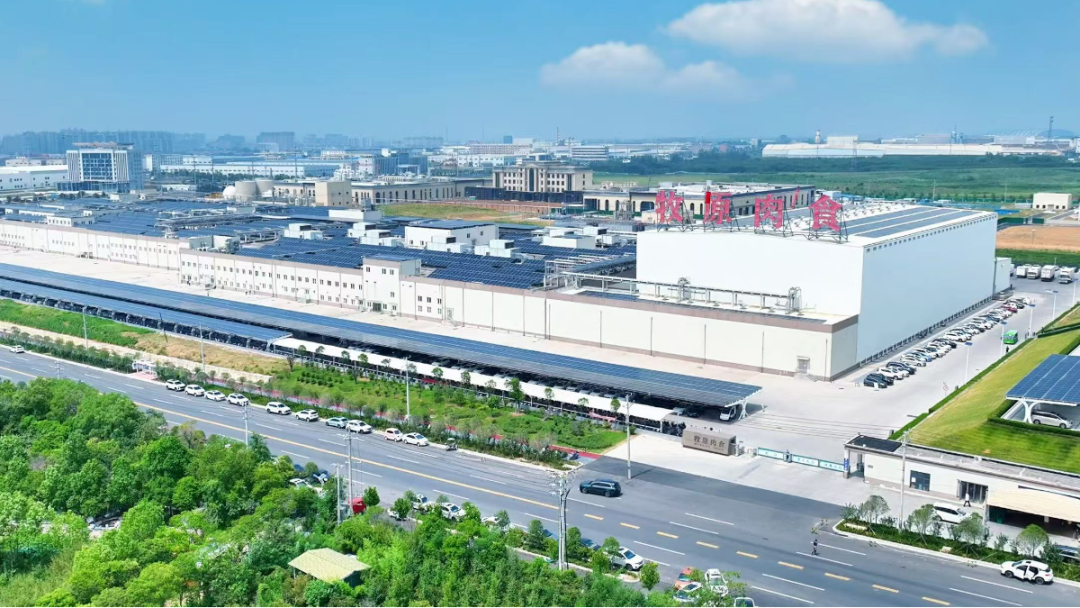
Muyuan added that the turnaround in its meat business last year was closely linked to the company’s investment in digitalisation over the past few years. As sales channels expand and slaughter plant design concepts mature, some of the company’s slaughter plants have started to resume construction. Future commissioning will depend on market conditions.
Overseas, Muyuan said it has moved from a light-asset service-output model to a stage of operating jointly with local companies and building actual capacity. Joint-venture and self-built projects in Vietnam are progressing in an orderly manner, and a joint-venture pig farm has recently started operations.
“This year, the company will further increase overseas expansion efforts,” Muyuan said. “Teams have been sent to the Philippines and several other countries and regions to explore business models.”
The focus this year, it said, is to build and stabilise overseas teams, and fully replicate its high-standard operating model abroad.
03 Building a pig-farming large model
Muyuan said it standardised its business processes in 2008 and 2009, and after 2019 pushed hard into key smart equipment and intelligent solutions. Over the past 2 years, the company has begun building a pig-farming large model.
The project focuses on core technologies and operational management in pig production. Using artificial intelligence, the system is designed to generate diagnostic reports for each farm and batch, helping solve production problems in time. It can also produce operating analysis reports for different regions and farm lines, and offer suggestions for performance improvement.
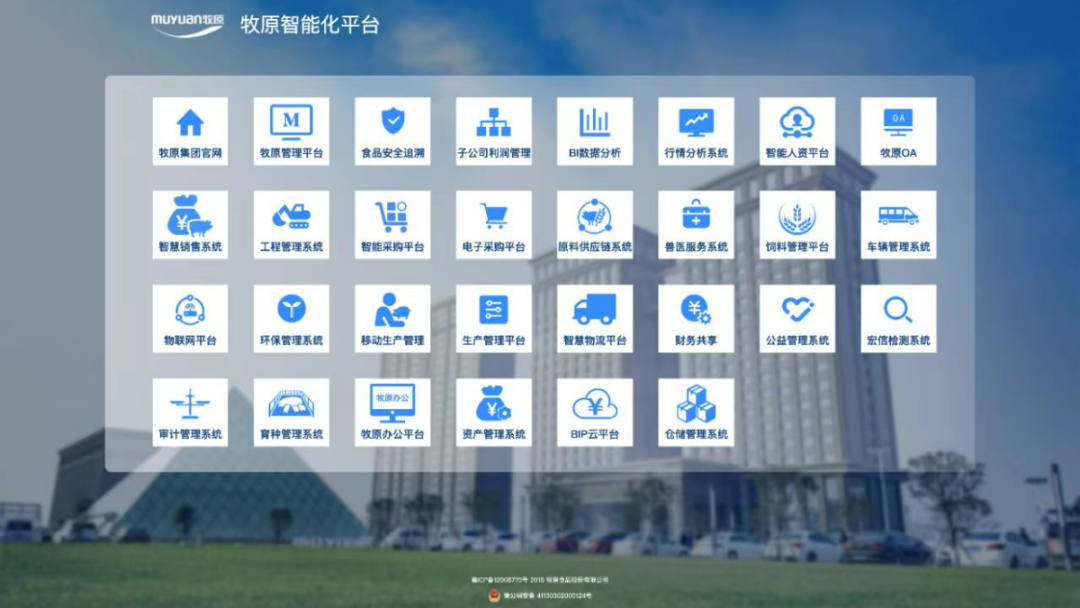
By embedding the experience and solutions accumulated during its development into the model, Muyuan said it can help frontline staff solve technical and management problems, improve labour efficiency, and narrow internal variation.
“The construction of the company’s pig-farming large model is still at an early stage,” Muyuan said. “In future, the company hopes it will become an internal core management platform, and then gradually be promoted to the industry as an important management tool for hog production.”
Muyuan said it has several core advantages in digital and intelligent development. The first is the large amount of underlying data it has accumulated over years of growth, which it sees as the foundation for using AI to drive organisational change. The second is its deep experience in hog production, its understanding of underlying technical knowledge, and the workable technical routes it has developed through years of practice. The company described this as its most important competitive advantage.
The third advantage, Muyuan said, is the industrial advantage created by its national layout. Beyond exporting technical solutions to the industry, it believes it can integrate resources and provide other services for farmers.
AgriPost.CN – Your Second Brain in China’s Agri-food Industry, Empowering Global Collaborations in the Animal Protein Sector.