Qin Yinglin backed pig production capacity controls at the Leman China Swine Conference on 23 October and said Muyuan had benefited from its cuts. He said its breeding sow herd fell from a peak of 3.62 million to 2.97 million at end-September, a reduction of 650,000 sows, or 18%. The report also examines halted construction, suspended production and the slaughtering business. Capacity measures must be distinguished from actual output.
Qin Yinglin, founder and lifetime honorary chairman of Muyuan Food, has called for controls on pig production capacity based on industry self-discipline and unified regulatory oversight. In a keynote address at the opening of the Leman China Swine Conference on 23 October, he said the industry needed to work together to create a healthier business environment if it was to pull itself out of the current market slump.
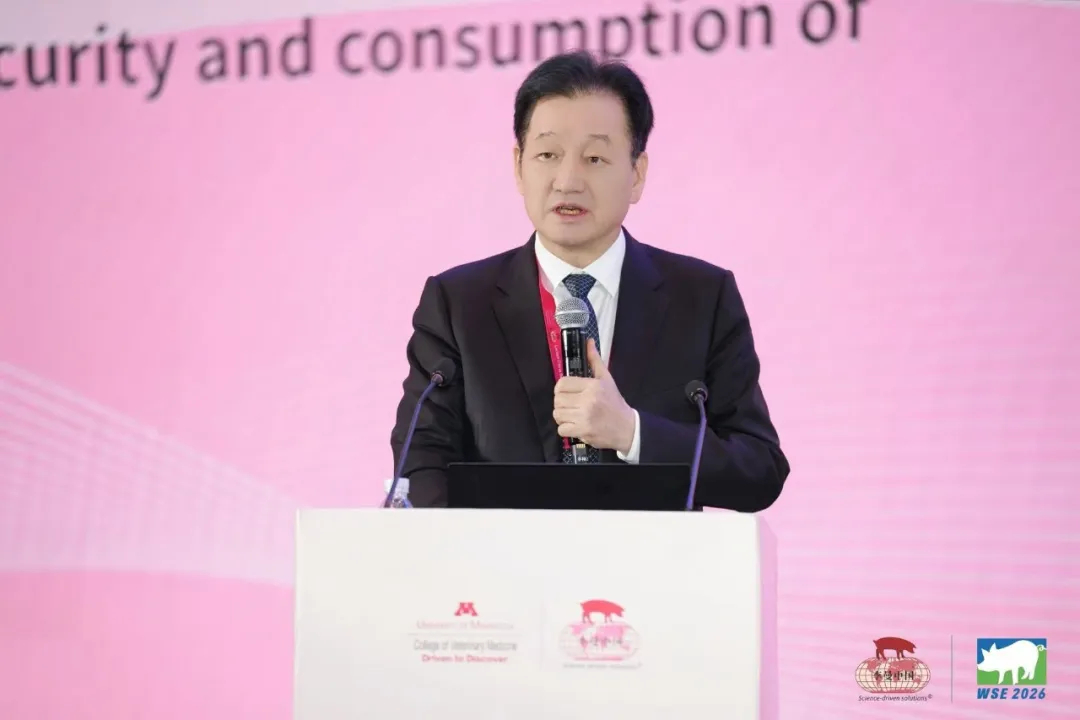
Qin Yinglin
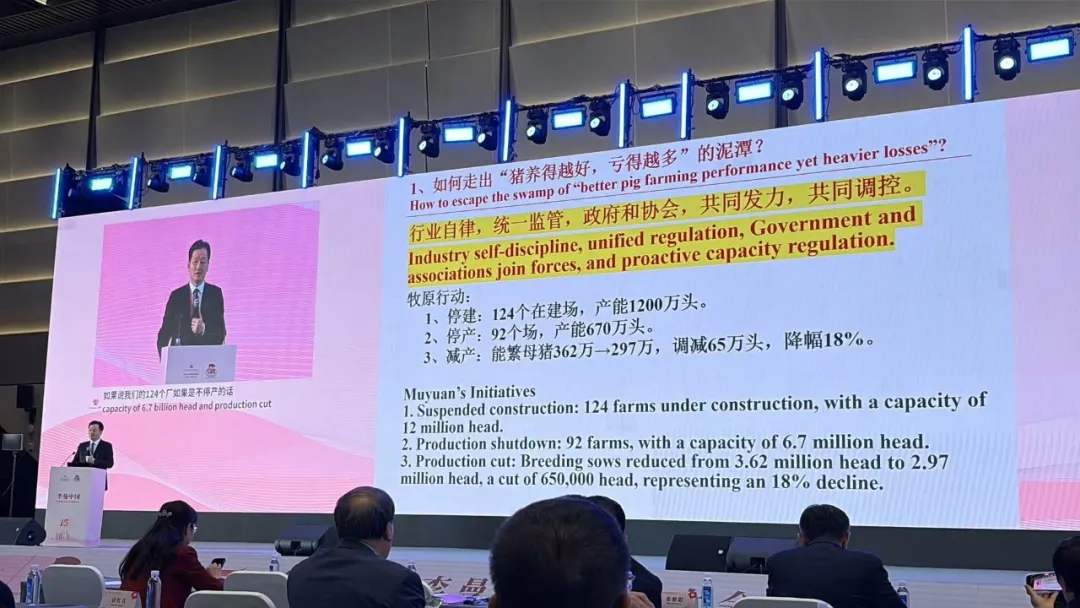
“How do we get out of a situation where the better we become at raising pigs, the more money we lose? The answer is simple. It comes back to industry self-discipline, unified oversight, and governments and associations working together to regulate capacity,” Qin said. Countries that had gone through a similar process had shown, through 30 or 50 years of experience, that regulation was necessary, he added.
Qin said Muyuan had taken the initiative in responding to China’s call for pig capacity controls. It had halted construction at 124 pig farms under construction representing capacity for 12 million pigs, and stopped production at 92 farms representing capacity for 6.70 million pigs. Its breeding sow herd had fallen from a peak of 3.62 million to 2.97 million at the end of September, a reduction of 650,000 sows, or 18%.
“If we had not stopped construction at those 124 farms, our plans would have been for 4.50 million sows. Our ambitions are big, but we still have to adjust capacity to the reality we face,” Qin said. “I can tell you here today that I believe we have benefited from the capacity cuts. Think back to when we began cutting capacity last year. Everyone expected pig prices to rise in June and July 2026, but in fact they did not.”
For Qin, building a better environment for the industry means focusing on three priorities: limiting losses at the bottom of the cycle, keeping small and medium-scale producers from going under when risks arise, and ensuring that those who put in the effort can survive.
Muyuan had previously said at an investor meeting that, as it responded to the capacity control policy, it was making timely adjustments to less efficient capacity within the business. It was drawing up new production plans for high-cost farms and production units, and providing their managers and staff with further training to support higher-quality development.
Despite the continuing reduction in sow numbers, the company’s productive biological assets have increased. Muyuan attributed this to recent innovations in its production processes: selecting replacement gilts from the suckling piglet stage, managing their health within the replacement herd, and using them to replace sows being culled. The aim is to eliminate disease and improve sow health and performance. The changes have resulted in some increase in productive biological assets in its financial accounts, the company explained.
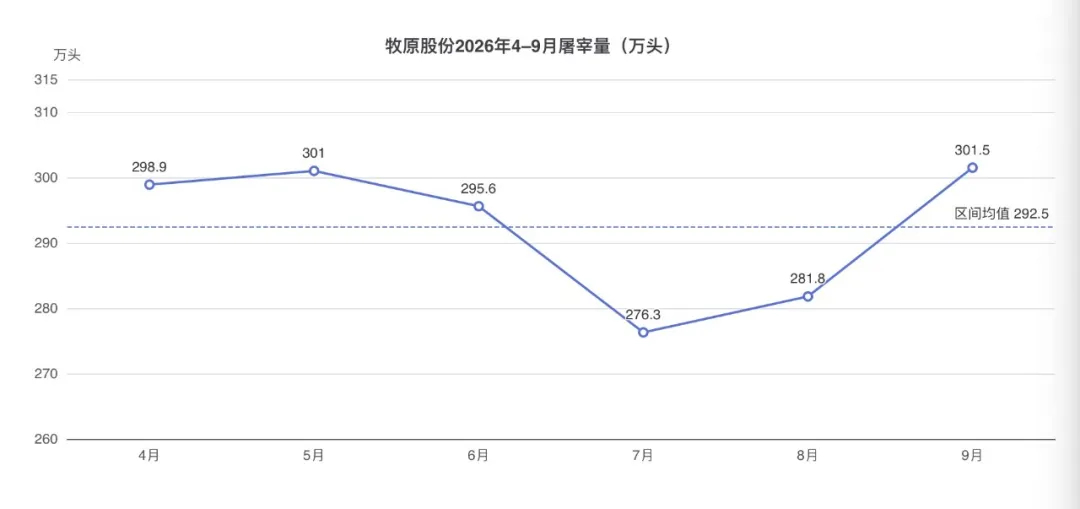
Muyuan is also opening up other sources of profit growth. Its slaughtering and meat business is expanding rapidly, with a substantial increase in slaughter volume and room for further capacity growth. Higher throughput and a better product mix are expected to improve profitability in slaughtering further. Meanwhile, its overseas business is growing rapidly, and its revenue and profit contributions will gradually be reflected in the company’s financial statements.
AgriPost.CN understands that the commissioning of a slaughter plant in Hua County, Henan, in August brought Muyuan’s number of operating slaughter plants to 11, with combined annual capacity of 31 million pigs.
The company also began disclosing monthly pig slaughter volumes in the second quarter of this year. The figures show that it slaughtered 17.55 million pigs over the six months from April to September 2026, averaging about 2.93 million a month, with capacity utilisation exceeding 100%.
AgriPost.CN – Your Second Brain in China’s Agri-food Industry, Empowering Global Collaborations in the Animal Protein Sector.