
China’s 2 largest pig producers, Muyuan and Wens, have both set a long-term production cost target of CNY 10 per kg (USD 1.39 per kg). Both companies are cutting costs through better disease control, breeding, management, digitalisation, and production efficiency. Despite a recent rebound in pig prices, Wens expects limited upside because supply remains ample and consumption is seasonally weak. The company also said it has sufficient financial reserves and has reorganised its pig business into 4 regional divisions.
China’s 2 largest pig producers have now set the same long-term production cost target. Following Muyuan, Wens has announced that it aims to reduce its comprehensive market hog production cost to CNY 10.00/kg (USD 1.39/kg), excluding the effects of fluctuations in feed ingredient prices

Cost-cutting road map
Wens said during a brokerage roadshow that cost reduction is currently the core task of its pig business.
To reach the target, Wens has broken down and tightened control of costs across the entire production cycle. It has also refined its cost accounting and developed an overall action plan covering 4 areas: production performance, efficiency, lean and intelligent manufacturing, and management optimisation.
These areas have been divided into 8 workstreams: improving breeding stock, disease elimination, raising the market-ready rate, reducing the feed conversion ratio (FCR), improving production models, increasing the efficiency of intelligent equipment, strengthening lean management, and using digital tools.
More than 20 specific measures have been assigned to individual business lines and operating units, supported by corresponding performance assessment schemes.
Muyuan outlined a similar direction at its 2025 annual shareholders’ meeting, held in May 2026. The company said it had identified CNY 600 (USD 83.57) in potential cost reductions and would work towards bringing production costs below CNY 10.00/kg (USD 1.39/kg).
Muyuan highlighted 4 routes towards that goal: fully implementing disease-control technologies, optimising incentive schemes for employees and managers, increasing investment in breeding, and strengthening the development and application of intelligent technologies.

Muyuan’s average total hog production cost was about CNY 12.00/kg (USD 1.67/kg) in 2025. Its target for 2026 is to reduce that figure to below CNY 11.50/kg (USD 1.60/kg).
Wens recorded a comprehensive market hog production cost of approximately CNY 12.20–12.40/kg (USD 1.70–1.73/kg) in 2025. Its 2026 target is CNY 11.80/kg (USD 1.64/kg).
During the recently completed 2nd quarter of 2026, Muyuan reduced its production cost to CNY 11.60–11.70/kg (USD 1.62–1.63/kg). Wens reported a cost of around CNY 12.00/kg (USD 1.67/kg), leaving a gap of about CNY 0.30/kg (USD 0.04/kg) between the companies.
Limited upside for pig prices
Wens also addressed the recent rapid rise in Chinese pig prices. The company identified 2 possible causes.
First, hog supplies declined. Data from China’s Ministry of Agriculture and Rural Affairs showed that the national breeding sow inventory fell by 1.1% month on month in October 2025. That decline broadly corresponds with hogs reaching the market in July 2026.
Second, the widening price spread between heavy pigs and standard-weight pigs encouraged smallholders to delay sales and keep animals on farm longer. That temporarily reduced market supply and helped prices rise quickly.
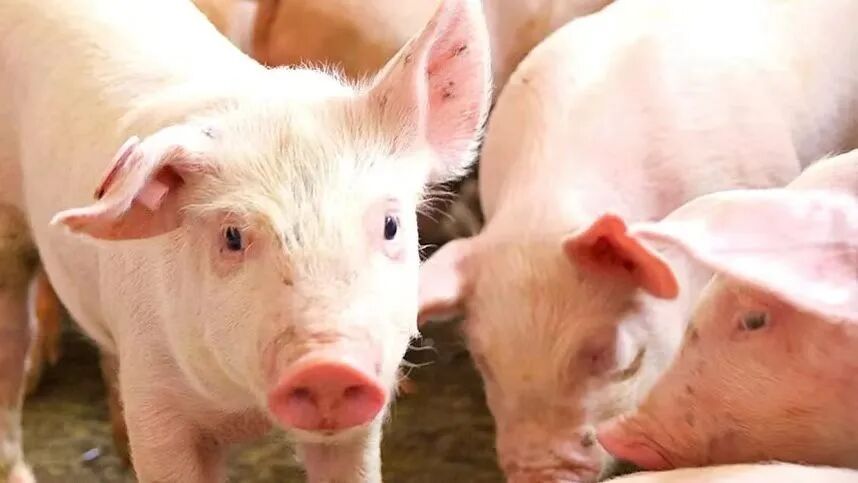
“However, it should be noted that the industry’s relatively loose supply-and-demand balance has not fundamentally changed,” Wens said. “In addition, hot weather has brought the market into a season of weak consumption, which will continue to limit the extent of the rebound.”
Based on previous market patterns, the company expects prices could come under renewed downward pressure in the short term. It added, however, that the next low was unlikely to fall below the previous price trough.
Despite the recent rebound, pig prices have not yet moved above the cost line. Wens therefore said it must continue building financial reserves for the depressed stage of the hog cycle.
At the end of June 2026, the company held nearly CNY 7 billion (USD 974.93 million) in cash. It also had more than CNY 30 billion (USD 4.18 billion) in unused bank credit facilities and CNY 10 billion (USD 1.39 billion) in registered bond issuance capacity. Additional funding options included bill financing and supply-chain financing.
“At present, the company has sufficient financial reserves and will not allow funding pressure to disrupt its established production, operating, and development plans,” Wens said.

Pig business reorganised around 4 regions
Wens also detailed a recent organisational reform of its pig business. The company removed a tier of subsidiaries, consolidated and reorganised its integrated operating companies, and shortened its management structure from 5 levels to 4.
It also established Pig Business Division 5 and a new Pig Production Technology Department.
Pig Business Division 1 is mainly responsible for southern China, while Division 2 covers the Yangtze River Delta. Division 3 oversees the Beijing-Tianjin-Hebei region and northern China, and the newly established Division 5 is responsible for southwestern China.
“With this, the company’s pig business has formed a new structure in which 4 regional production divisions develop in coordination, further strengthening regional synergies and optimising resource allocation,” Wens said.
Zhao Huaren serves as president of Pig Business Division 5. The division is headquartered in Nanchong, Sichuan province, and was officially inaugurated in June 2026.
AgriPost.CN – Your Second Brain in China’s Agri-food Industry, Empowering Global Collaborations in the Animal Protein Sector.