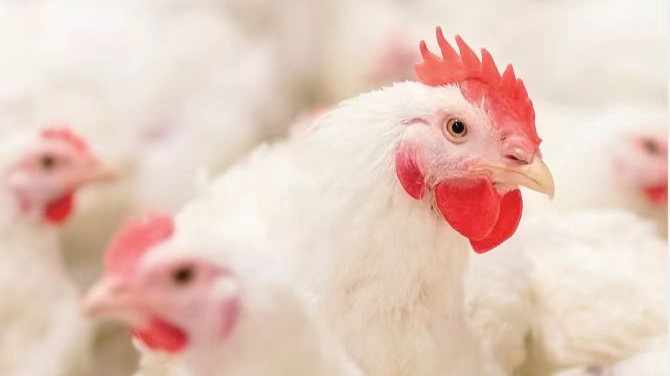
China’s livestock sector continued to expand in the first half of 2026, with total meat output rising year-on-year. Hog slaughter growth slowed as breeding sow numbers declined, while cattle and sheep production remained relatively stable. Poultry was the fastest-growing segment, supported by higher slaughter volumes, although egg production declined.
China’s livestock sector produced 50.50 million tonnes of pork, beef, mutton, and poultry meat in the first half of 2026, according to the National Bureau of Statistics (NBS).
That was an increase of 2.07 million tonnes, or 4.3%, from the same period in 2025. Pork production rose 3.3%, while poultry meat output increased 9.4%. Beef and mutton production declined by 1.0% and 3.9%, respectively. Milk production increased 2.4%, whereas egg production fell 2.2%.
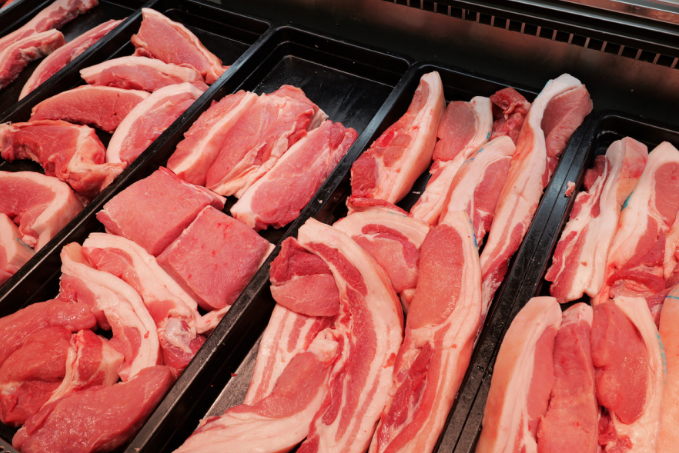
In absolute terms, China produced 31.19 million tonnes of pork, up 990,000 tonnes year-on-year. Beef production reached 3.39 million tonnes, down 40,000 tonnes, while mutton output fell by 80,000 tonnes to 2.02 million tonnes. Poultry meat production rose by 1.20 million tonnes to 13.90 million tonnes.
Prices for live cattle, live sheep, live poultry, and eggs increased by 8.3%, 6.8%, 0.4%, and 2.8%, respectively, during the first half of the year. Hog prices fell by 23.1%, while milk prices edged down by 0.2%.
Hog slaughter growth loses pace
Wei Fenghua, Director-General of the Department of Rural Social and Economic Survey at the NBS, summarised the first-half picture as follows: Hog slaughter growth slowed, cattle and sheep production remained broadly stable, and poultry slaughter continued to expand.
China slaughtered 372.46 million hogs during the first 6 months of 2026, an increase of 6.27 million head, or 1.7%, year-on-year. The growth rate was 1.1 percentage points lower than in the first quarter.
At the end of the second quarter, the national hog inventory stood at 424.91 million head. That was an increase of 450,000 head, or 0.1%, from a year earlier. The growth rate was 1.4 percentage points below the first-quarter figure. The breeding sow inventory declined more sharply. It fell by 2.63 million head, or 6.5%, year-on-year to 37.80 million head. The rate of decline was 3.2 percentage points greater than in the first quarter. The sow herd was equivalent to 100.8% of the normal retention level of 37.50 million head, indicating that basic production capacity was being reduced within a reasonable range.

Mao Shengyong, Deputy Commissioner of the NBS, told a press conference held by the State Council Information Office that the slowdown in hog slaughter was mainly linked to stronger government measures to regulate production capacity in response to the continued decline in hog prices.
The breeding sow herd had consequently contracted at a faster pace, he said. This should help improve the balance between supply and demand in the hog market, while hog prices had recently begun to recover.
Poultry remains the strongest-growing category
China slaughtered 21.19 million beef cattle in the first half of the year, down 830,000 head, or 3.8%, year-on-year. Milk production increased by 440,000 tonnes to 19.09 million tonnes, a rise of 2.4%.Sheep slaughter declined by 8.84 million head, or 6.7%, to 123.96 million head.
At the end of the second quarter, the national cattle inventory stood at 95.57 million head, down 4.3% year-on-year. The sheep inventory fell 5.2% to 285.17 million head.
Poultry continued to move in the opposite direction. China slaughtered 8.76 billion birds during the first half of 2026, an increase of 630 million birds, or 7.7%, from the same period in 2025.
Egg production, however, declined by 390,000 tonnes, or 2.2%, to 16.90 million tonnes. The national poultry inventory reached 6.35 billion birds at the end of the second quarter, up 0.2% year-on-year.
AgriPost.CN – Your Second Brain in China’s Agri-food Industry, Empowering Global Collaborations in the Animal Protein Sector.