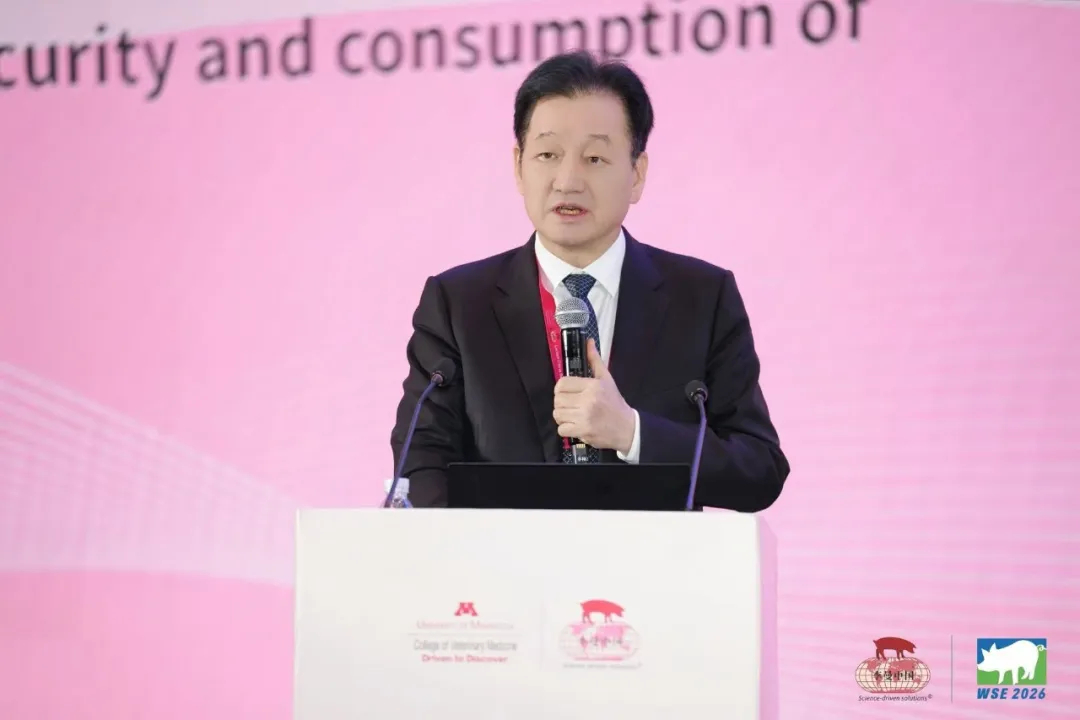
Zhu Zengyong expects China’s pig prices to fluctuate within a narrow range in 2027 and sees little scope for another prolonged price boom. Speaking at the 2026 International Pork Development Forum, he argued that supply assessment should consider sow productivity and market live weight alongside herd numbers. The report examines his views on supply adjustment, risk management and trade. These are the analyst’s assessments and forecasts, rather than guaranteed market outcomes.
China’s pig price cycle is changing, with prolonged periods of sharp gains giving way to shorter spells of stronger returns and market recovery, according to Zhu Zengyong. The Ministry of Agriculture and Rural Affairs’ chief analyst for the pork value chain, and a researcher at the Institute of Animal Science, Chinese Academy of Agricultural Sciences (CAAS), in Beijing, believes the sector is unlikely to see another sustained, steep upswing.

Zhu Zengyong
Zhu was speaking at the 2026 International Pork Development Forum, held alongside the 15th Leman China Swine Conference. Looking at price cycles, supply and demand, and trade, he said China’s pig sector was at a critical point in its transition towards higher-quality development.
Moving beyond bets on the next price rise
Taking a longer view, Zhu argued that the previous pig cycle, which began in April 2022, had largely run its course by April 2026. Prices remain weak, but he sees a relatively low likelihood of them falling below this April’s trough. The market still needs time to establish a bottom.
The unusually low profitability of that cycle supports his assessment. Average industry profit was only a little over CNY 100 per pig (a little over USD 15.00 at the reference rate), making it the least profitable cycle since 2004, he said. In earlier cycles, apart from the exceptional windfall in the early stages of African swine fever (ASF), profit had generally been CNY 150–200 per pig (approximately USD 22.49–29.99). The downward shift in typical returns means the old model of using gains in an upswing to cover losses in a downturn no longer works.
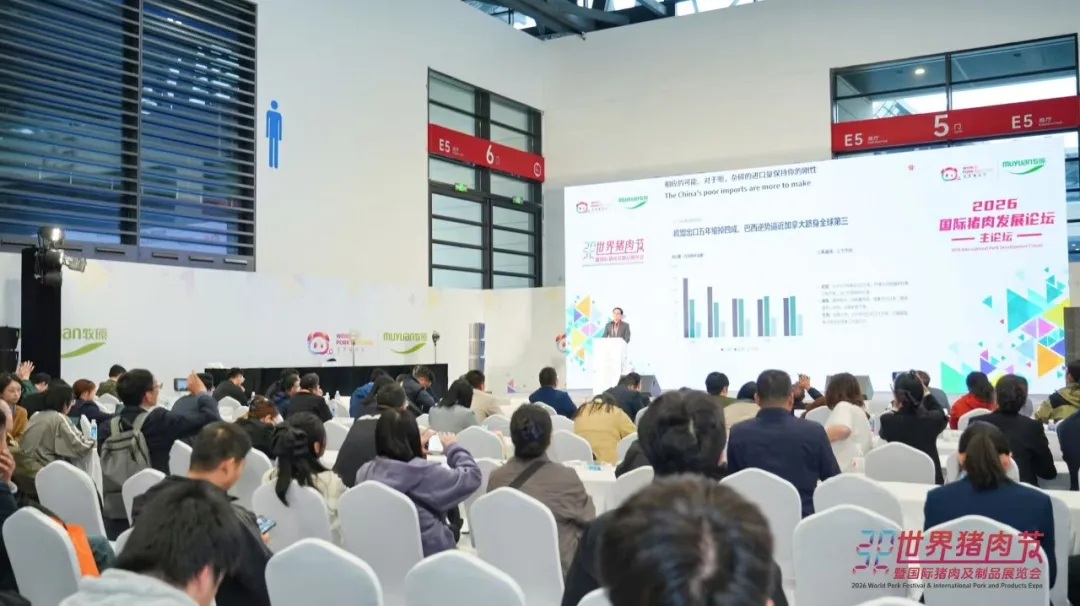
Zhu urged the industry to reconsider its assumptions about the cycle. Many international investment institutions expect China to enter a new pig cycle in 2027, he noted, but he believes that view lacks reliable supporting data. Instead, he expects prices to fluctuate within a narrow range in 2027, with a recovery still taking time.
He also noted that some companies had stepped up the addition of replacement gilts to their herds in the third quarter of this year, which he regarded as an overly optimistic view of next year’s market. The US experience is a frequently cited historical reference: pig prices plunged in both 1998 and 1999, at one point falling below CNY 7/kg (approximately USD 1.05/kg), before fluctuating at low levels for about a decade. It was not until leading companies began jointly restraining production in 2009 that prices started to recover from 2010.
“It is worth paying attention to where value is added. In the US, most value addition takes place in slaughtering and processing, whereas in China the key stage is still pig production,” Zhu said. “That makes it difficult for us simply to copy European and US models. We need to adjust capacity proactively and appropriately, alongside government regulation.”
Supply adjustment becomes the central challenge
Zhu’s assessment is that demand is now largely saturated. The industry’s main challenge has therefore shifted from demand growth to adjusting supply, with more effort needed on the supply side to bring the market broadly into balance.
The pig production capacity control plan revised and released in May this year set the normal breeding sow herd benchmark at 37.50 million, according to the official figures cited in the report. The current herd is already about 10% below that level. Zhu cautioned, however, that sow numbers must be assessed alongside supply trends. As the industry improves, supply capacity and the stability of supply have more bearing on prices than the absolute herd count alone. Breeding sow numbers need to be considered together with productivity measures such as pigs weaned per sow per year (PSY) and market live weight, both of which have improved significantly compared with the past.
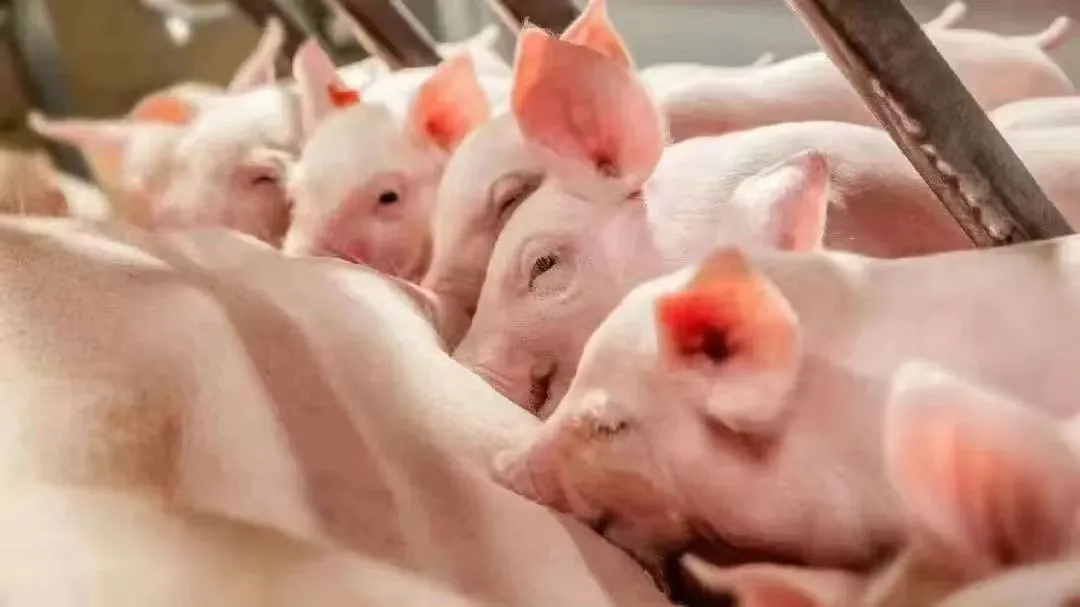
Price fluctuations also affect sow capacity adjustments, the resulting supply capability and company strategies differently from earlier cycles, Zhu said. Producers once depended on favourable market conditions, using profits from price rises to offset downturn losses. In the current cycle, insurance, futures and other financial tools have become part of routine business, substantially expanding their options for managing price risk. “In other words, capacity has become much less responsive to prices than in previous cycles, while its persistence has increased.”
Before September 2025, falling global feed ingredient costs had allowed pig production to remain profitable even as pig prices declined. That created the mistaken impression that prices had little further to fall and would soon turn upwards, Zhu said. In fact, prices have continued to search for a bottom since last September, and the industry has remained loss-making. Most market participants had also rejected earlier forecasts of relatively low prices in the fourth quarter of this year. For Zhu, this shows that many still assess today’s supply and demand conditions through the assumptions of past cycles.
Overseas markets offer another outlet for capacity
Zhu expects China’s pork imports to remain relatively low as the pig sector has become substantially more resilient since ASF. Imports are more likely to stay in the range of several hundred thousand tonnes, he said.
China’s pork self-sufficiency rate exceeded 98% last year, according to the presentation. “Since ASF, the whole pig industry has entered a phase of higher-quality development, accompanied by a marked increase in the role of capital,” Zhu said. He expects this to reduce the effects of future external shocks, including major disease outbreaks and broad fluctuations in feed ingredient prices.
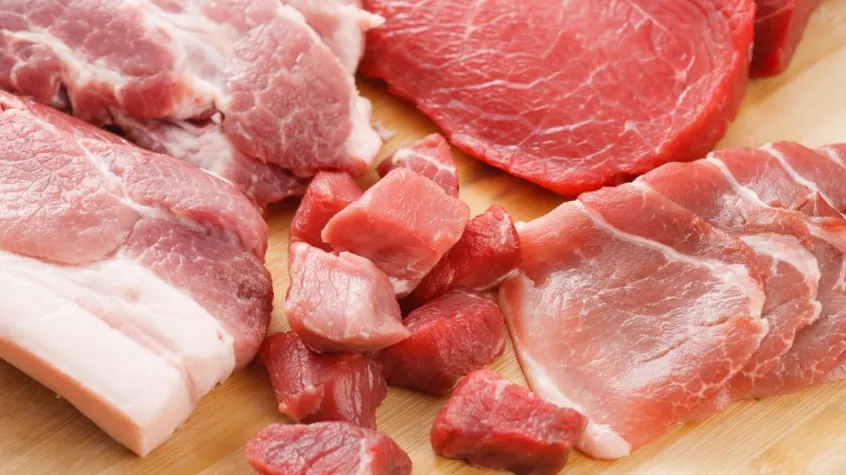
Import sources are also changing. Before ASF, Germany was China’s main supplier, followed by a shift towards Spain. Brazil and Spain have alternated as the leading sources over the past two years, while shipments from the US and Canada have fallen sharply. Following relevant agreements between China and Brazil, Brazil is expected to become a major source of pork offal imports. Russian pork shipments to China have also risen notably over the past two years.
On the export side, mainland China has historically shipped mainly to Hong Kong and Macao, keeping overall volumes small. Overseas expansion has largely taken the form of companies establishing operations abroad, which Zhu sees as one way to absorb excess capacity. Last year, China began exporting to markets including Mongolia, Laos, Cambodia and Singapore; volumes remain small but are growing quickly. Southeast Asia, which has been badly affected by ASF, could become a major pork import market globally. Demand also remains in traditional importing markets such as Japan and South Korea, leaving some room for China’s pork exports to grow.
Zhu also noted trade friction between the EU and Brazil before September this year over issues including animal welfare and environmentally sustainable development. To participate in global trade, China needs to adjust its industry strategy in line with the direction of higher-quality pig production worldwide, he said.
A more stable industry takes shape
After several cycles of efforts to improve performance, China’s pig sector has relatively limited scope for further large cost reductions, Zhu said. Predominantly fresh meat consumption also limits the potential for further downstream processing. Companies need to develop their downstream businesses, but that transition will take considerable time.
Zhu expects greater integration across the industry to lead to different forms of business alliances. Such arrangements will also be a key way for mid-sized companies and small and medium-sized family farms to manage the cycle and reduce market risk.
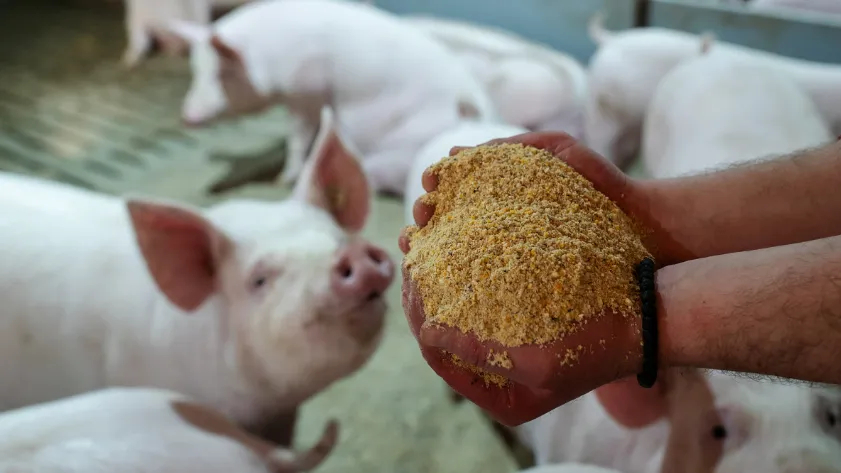
“There is light ahead: challenges also bring opportunities,” Zhu said. He stressed that China’s pig market had become markedly more stable. After pork output reached a record last year, production is expected to exceed 60 million tonnes this year. Imports now have much less influence at the margin on the domestic market, while frozen pork inventories and other short-term factors are the main variables currently constraining it.
The industry can move towards a new phase of higher-quality development by adjusting capacity in line with policy guidance, improving pig quality and production cost competitiveness, and pursuing environmentally sustainable development, rather than betting on another exceptional price cycle. For those still operating in the sector, that may be a more significant signal than any single round of rising prices.
AgriPost.CN – Your Second Brain in China’s Agri-food Industry, Empowering Global Collaborations in the Animal Protein Sector.