China’s leading feed companies are expanding well above the industry average, accelerating consolidation in the domestic feed sector. Haid Group and New Hope Liuhe both recorded strong feed sales growth in the first half of 2026, particularly in overseas markets. While improving scale, production efficiency, and cost control at home, the 2 companies are also accelerating international expansion. Overseas operations are expected to become an increasingly important growth driver, although rising raw material costs, capacity expansion, and accounts receivable remain key challenges.
China’s largest feed companies are growing significantly faster than the wider market, pointing to further consolidation in the country’s feed industry. At the same time, overseas operations are emerging as an increasingly important growth engine for the leading players.

Haid Group, China’s and the world’s largest feed company, reported external feed sales of 14.78 million tonnes in the first half of 2026, up around 8% year-on-year. Overseas feed sales grew by more than 25%.
New Hope Liuhe, China’s second-largest feed company, reported an even stronger increase. The company said during an earnings briefing that external feed sales reached 13.16 million tonnes in the first half, up more than 15% year-on-year. Overseas external sales reached 3.58 million tonnes, also increasing by more than 25%.
By comparison, data previously released by the China Feed Industry Association showed that national industrial feed production reached 168.50 million tonnes in the first half of the year, up 3.9%. The figures show that China’s leading feed companies are expanding considerably faster than the overall market.
Different trends across feed categories
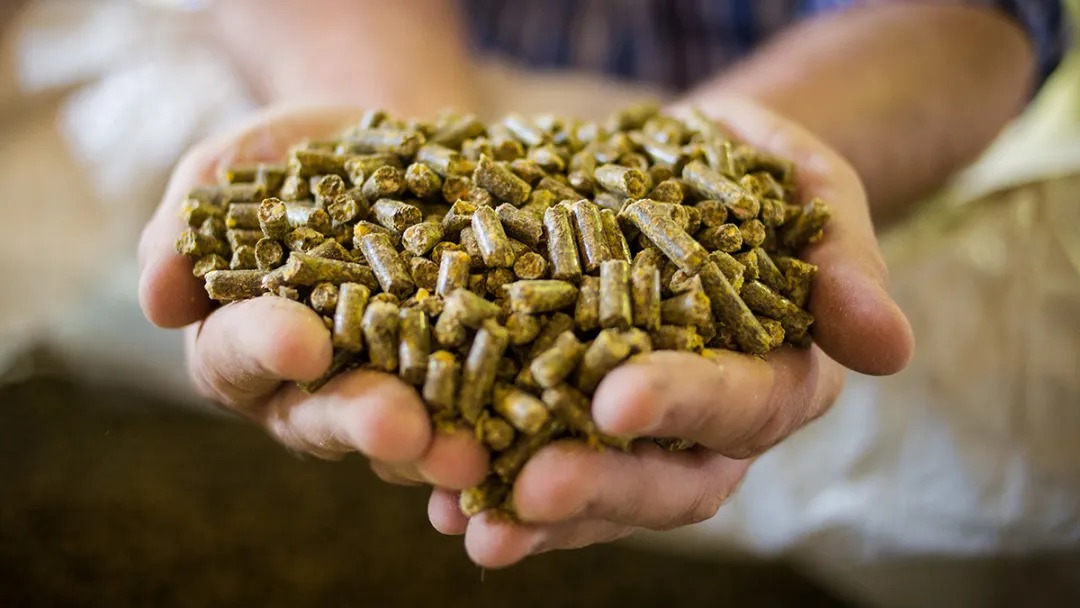
Growth varied significantly between feed categories.
China produced 83.53 million tonnes of pig feed in the first half, up 7.9% year-on-year and reaching a record high. Layer feed production fell 10.4% to 14.90 million tonnes, the lowest level for the period in the past 5 years. Meat poultry feed production declined 0.4% to 49.62 million tonnes.
Aquafeed stood out, with production increasing 17.4% to 11.10 million tonnes. Ruminant feed production rose 3.6% to 7.20 million tonnes.
The product mix of the 2 leading companies reflected some of these market trends.
Haid reported external pig feed sales of 3.91 million tonnes, an increase of around 15%. External poultry feed sales were approximately 7.22 million tonnes, slightly lower year-on-year, while aquafeed sales rose around 21% to 3.40 million tonnes. External sales of ruminant feed and other products totalled 250,000 tonnes.
At New Hope, pig feed sales reached 2.70 million tonnes, up 22%, while poultry feed exceeded 9 million tonnes, increasing 11%. Aquafeed sales approached 1 million tonnes, up 22%, and ruminant feed exceeded 300,000 tonnes, an increase of 30%.

Looking to the second half, Haid said poultry feed sales had been significantly affected by low downstream poultry inventories during the first 6 months. The company expects poultry inventories and poultry feed demand to improve from their low levels in the second half.
Hog prices, meanwhile, remain low, and Haid said its pig feed sales strategy is focused on controlling accounts receivable risk. In aquaculture, the sharp increase in fishmeal prices has reduced farmers’ willingness to increase feed inputs for specialty aquatic species.
New Hope said its domestic feed business will continue to pursue its strategy of “scaling up, optimising structure, and improving efficiency.” This includes increasing utilisation rates at individual plants, reducing the number of inefficient companies operating below 80% capacity utilisation, cutting the number of loss-making companies, and continuing to develop external markets for its premix business.
Overseas, New Hope will continue its “full production–capacity expansion–full production” approach. It plans to first raise utilisation rates at existing facilities, lower costs while increasing scale, ensure new capacity projects are delivered on schedule and at the required quality, and strengthen the recruitment and development of overseas talent.
At the end of last year, New Hope expected total feed sales in 2026 to increase by at least 3.50 million tonnes compared with 2025. The company said its first-half performance was in line with the budgeted target.
Scale and efficiency drive growth
New Hope said first-half feed sales reached the highest level for the period in the company’s history, with improvements in both volume and profit. Feed operations generated a profit of CNY 690.00 million (USD 96.10 million), up around 15% year-on-year.

The company attributed the performance primarily to its strategy of pursuing scale growth while deepening efficiency improvements and reducing costs.
New Hope continues to regard scale as the competitive foundation of its feed business. In China, it stepped up development of large-scale farms and major customers during the first half, using its products and services to build closer relationships with high-quality customers. As a result, external feed sales continued to outperform the overall industry.
On the manufacturing side, the company has been upgrading older equipment and increasing factory automation. It has also expanded the use of bulk feed in response to the shift towards larger-scale livestock farming. These measures improved automation and production efficiency, lifting capacity utilisation by 8 percentage points year-on-year.
New Hope has also worked with third-party logistics platforms and optimised transport routes and transportation combinations. Average logistics costs per tonne declined further.
Combined with improvements in sales and production labour efficiency and better energy management, these measures reduced New Hope’s total average cost per tonne by 8% year-on-year to around CNY 171.00 per tonne (USD 23.82 per tonne).
At the same time, New Hope said helping customers reduce the cost of producing meat has become a key means of improving its competitiveness amid widespread losses in the livestock sector.
The company has established a procurement system combining centralised purchasing at headquarters with regional sourcing. Bulk and strategic raw materials are purchased centrally from major domestic and international grain traders to secure cost advantages, while regional subsidiaries purchase locally available ingredients directly. This shortens supply distances, helps maintain ingredient freshness, and supports continued optimisation of formulation costs.

For Haid, research and development-driven feed product performance remains its most important competitive advantage.
The company conducts fundamental, forward-looking research into key common issues across 7 areas: animal genetics and breeding, animal nutrition and feed, animal medicine and biopharmaceuticals, microbial engineering, biochemical engineering, protein engineering, and healthy farming. Haid said it continues to improve its 3-tier R&D system to support the group’s rapid development.
Based on this research platform, Haid aims to differentiate its product portfolio from competitors. Its premium products carry higher prices but focus on clear advantages in animal survival, growth performance, and growth efficiency, supporting a strong brand effect. Mid-range products, meanwhile, are priced closer to competing products while maintaining leading production performance, with the aim of delivering a strong price-to-performance ratio.
Overseas expansion accelerates
Haid has accelerated its overseas expansion in recent years. Since the beginning of 2026 alone, Singapore Haid has opened, construction has started on a feed mill in Laos, and the group has established its first wholly owned overseas breeding poultry company in Indonesia.
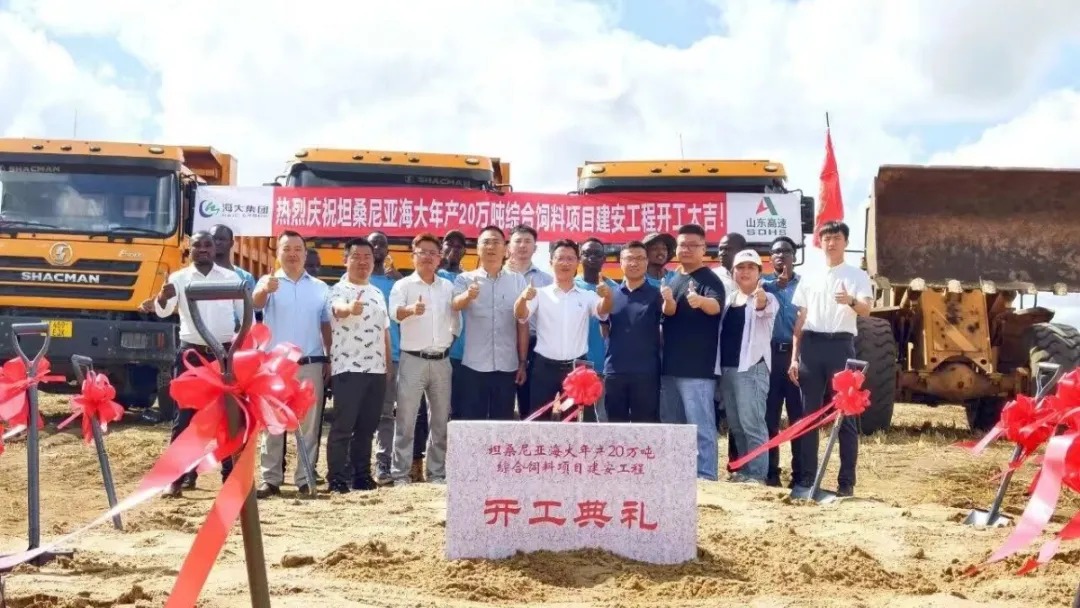
The company has also broken ground on the Vinh Phuc Hailong feed mill in northern Vietnam, started production at the Tien Giang Shenglong feed mill in southwestern Vietnam, and begun construction of a feed production base in Tanzania.
Despite the steady expansion, Haid acknowledged that its overseas operations face several challenges.
Sharp increases in raw material prices this year have created short-term cost pressures for overseas feed businesses. Fishmeal prices, in particular, have reached record highs, putting widespread pressure on feed companies in major aquaculture regions such as Southeast Asia and Latin America.
Another challenge is capacity expansion. Haid said the difficulty and efficiency of securing additional production capacity varies considerably between countries.
Accounts receivable are another concern. Many of the markets in which Haid operates are emerging markets and developing countries, meaning the scale of receivables is increasing as its overseas business expands.
Haid said concentration in overseas feed markets remains relatively low. These markets are generally led by integrated agricultural and food-processing companies, while leading businesses tend to operate across the entire value chain. No dominant player has yet emerged across both regions and product categories, and the competitive landscape remains relatively stable.
While continuing to build overseas feed capacity, Haid plans to expand its seedstock and animal health businesses internationally and establish comprehensive technical service support. The aim is to strengthen customer relationships and brand loyalty, build barriers to global competition, and provide a stronger foundation for long-term overseas growth.
New Hope builds on an early start overseas
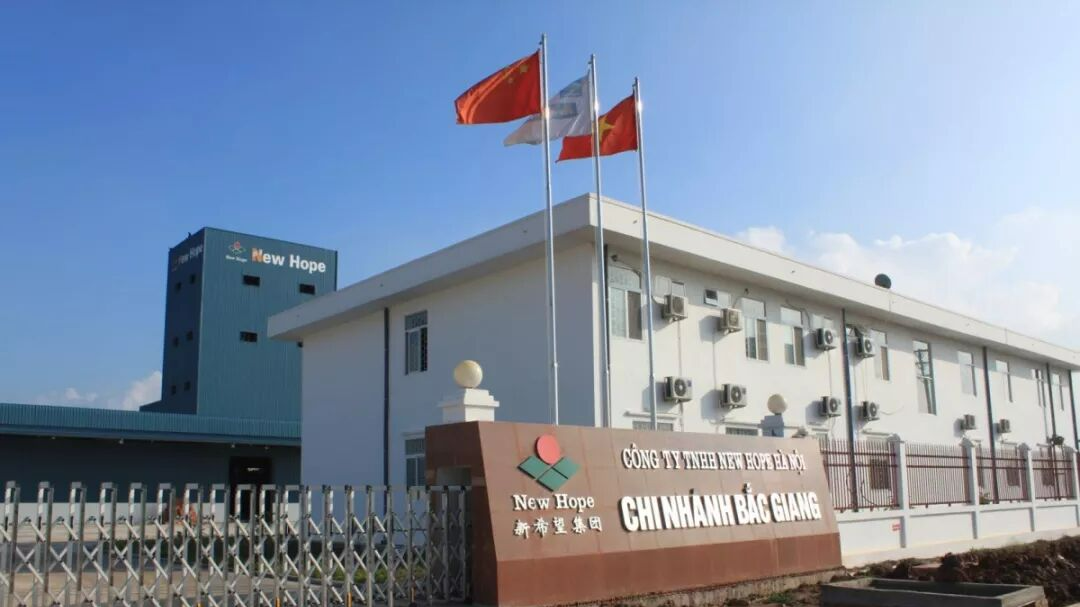
New Hope, which became one of the first Chinese feed companies to expand internationally in 1999, currently operates more than 60 subsidiaries and branches across 14 countries and regions. The company also views the growing overseas expansion of other Chinese feed producers positively.
“First, when more Chinese companies go overseas, it helps increase the influence and appeal of Chinese enterprises in local markets,” New Hope said. “Second, companies still differ in terms of regions and feed categories as they expand overseas. We will make full use of our first-mover advantages and deepen our competitive moat overseas so that we can develop in host countries over the longer term.”
The company also pointed to its expansion in Africa and its efforts to develop new business areas and business models.
“The overall market is extremely large. We are not concerned that the arrival of several more Chinese peers will leave everyone without room for growth. For quite a long time, there is no need to be overly concerned about this issue,” New Hope said.
After almost 3 decades of overseas development, New Hope said its feed business ranks among the top 3 in many countries and is second or first in some markets. Over that period, the company said it has adapted to the political and business environment, culture, and communities of its host countries.
“In many host countries, local people no longer regard us primarily as a foreign-invested company, but as a familiar local business,” New Hope said. “That is one of our first-mover advantages in these markets.”
AgriPost.CN – Your Second Brain in China’s Agri-food Industry, Empowering Global Collaborations in the Animal Protein Sector.