China’s breeding sow inventory fell 6.5% year-on-year to 37.80 million head by the end of the first half of 2026, close to the current normal retention level. Despite a recent recovery in hog prices, Wens expects sow herd reduction to continue as industry margins remain under pressure. China’s Ministry of Agriculture and Rural Affairs also said hog supply remains ample and that production capacity regulation will continue to help balance supply and demand.
China’s breeding sow inventory stood at 37.80 million head at the end of the first half of 2026, down 6.5% year-on-year, according to data from the National Bureau of Statistics. That was 100.8% of the current normal retention level of 37.50 million head.
Overall, as the Chinese authorities have stepped up comprehensive regulation of hog production capacity, baseline capacity has been reduced to a more reasonable level. Hog prices have also recovered recently.
That has raised 2 questions for the industry: Will policymakers continue to push for further capacity reductions in the second half of the year? And has the ongoing reduction in the breeding sow herd already come to an end?
Wens, China’s second-largest pig producer, recently addressed the issue during an in-person meeting with institutional investors.
The company said that although hog prices recovered somewhat in July, they had not moved above the industry’s average cost level. Wens therefore expects the industry as a whole to remain in a state of negative cash flow, with breeding sow numbers still being reduced.
The exact extent of the reduction, Wens added, will mainly depend on how much financial pressure individual industry participants can withstand.
Wens also commented on the recent fluctuations in piglet prices. According to the company, current piglet prices are relatively low, while some market participants expect hog prices to rise toward the end of the year. That has increased willingness to restock and supported a rapid rise in piglet prices.
The company cautioned, however, that actual hog price developments may differ from market expectations.
The government, meanwhile, has also signalled that production capacity regulation will continue.
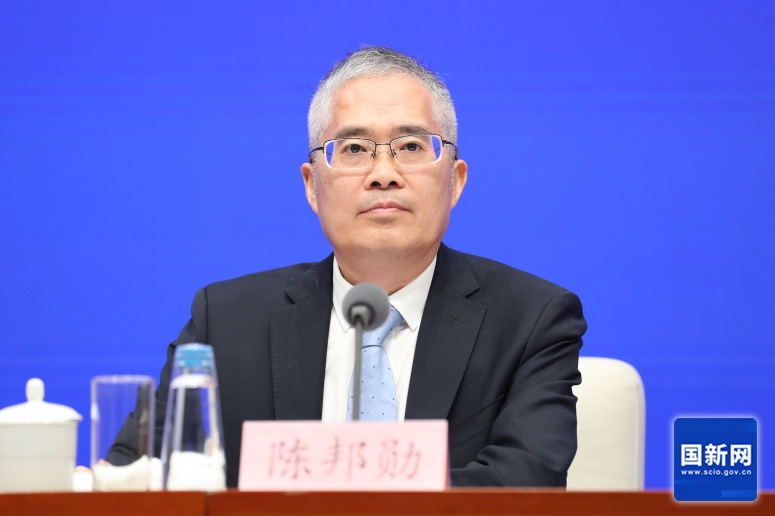
Speaking at a State Council Information Office press conference on July 24, Chen Bangxun, director-general of the Department of Development Planning at China’s Ministry of Agriculture and Rural Affairs (MARA), said hog production is closely linked both to consumers’ daily meals and to the livelihoods of pig producers. Keeping the industry developing in a stable and orderly way, he said, requires managing the “hog cycle” effectively.
Since the beginning of the year, MARA and other government departments have adopted a combination of measures to adjust supply, promote consumption, and increase purchasing and stockpiling, with the aim of regulating hog production capacity.
As those earlier measures gradually took effect, the supply-demand balance in the hog market began to improve from late June. Prices recovered amid fluctuations, while losses for pig producers eased.
There is still reason for caution, however. “Current hog market supply remains ample overall, and the pattern of strong supply and weak demand has not fundamentally changed,” said Director-General Chen Bangxun, Department of Development Planning at MARA.
Chen said the ministry would continue its comprehensive regulation of hog production capacity, publish early-warning information more frequently through multiple channels, and guide supply and demand toward a better balance.
He also called on pig producers to closely monitor changes in supply and demand and arrange production rationally. The aim, he said, is for all sides to help sustain the recovery in hog prices while avoiding sharp market swings.
AgriPost.CN – Your Second Brain in China’s Agri-food Industry, Empowering Global Collaborations in the Animal Protein Sector.