China’s 2025 broiler breeding capacity hit record highs, boosting output and deepening oversupply. Prices and profits fell; the report urges stronger branding, clearer differentiation, and more exports, while noting domestic white-broiler genetics topped 30% share but reliance on external genetics remains high.
China’s National Broiler Industry Technology System says the country’s broiler breeder capacity expanded again in 2025, pushing short-term production higher and worsening a phase of supply overshoot.
In its latest report, Analysis of China’s Broiler Industry in 2025: Situation, Challenges and Policy Suggestions, the system said both white broiler and yellow broiler segments saw record-high annual replacement volumes and record-high average monthly on-production inventories across Grandparent Stock (GP) and Parent Stock (PS), setting the stage for a sharp rise in broiler output.
Record GP replacement sets the tone
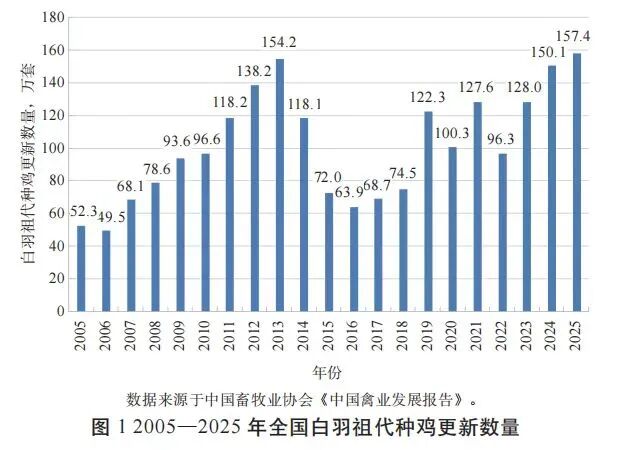
Citing monitoring data from the China Animal Agriculture Association, the report said China’s white broiler GP annual replacement reached 1.5741 million sets in 2025, up 73,400 sets from 2024 (+4.89%), and above the previous peak of 1.5416 million sets in 2013.
For yellow broiler GP, annual replacement was 2.5033 million sets, up 69,100 sets year on year (+2.84%), marking a second consecutive year at a record high.
Output jumps, while prices fall
With production continuing to scale up, chicken meat output rose notably. The report said total marketings of specialised broilers—covering white broiler, yellow broiler, and small-sized white broiler—reached 15.635 billion birds in 2025, up 5.34% from 2024. In addition, 1.100 billion culled layers were marketed last year.
Combined, national chicken meat production was reported at 28.0344 million tonnes in 2025, up 6.18% year on year.
By category, 2025 marketings were:
- White broiler: 9.057 billion birds (+5.97%)
- Yellow broiler: 3.542 billion birds (+6.23%)
- Small-sized white broiler: 2.523 billion birds (+1.86%)
Their shares stayed broadly stable at 61.21%, 22.65%, and 16.14%, respectively.
Yet prices moved the other way, with profits squeezed across the chain. The report put the average white broiler live price in 2025 at CNY 7.28/kg (USD 1.01/kg), down 6.60% year on year and at a low level for roughly the past decade. It also noted steep drops of nearly 15% in February and 10% in July, before prices recovered toward year-end, reaching CNY 7.63/kg (USD 1.06/kg) in December—roughly flat versus December 2024.
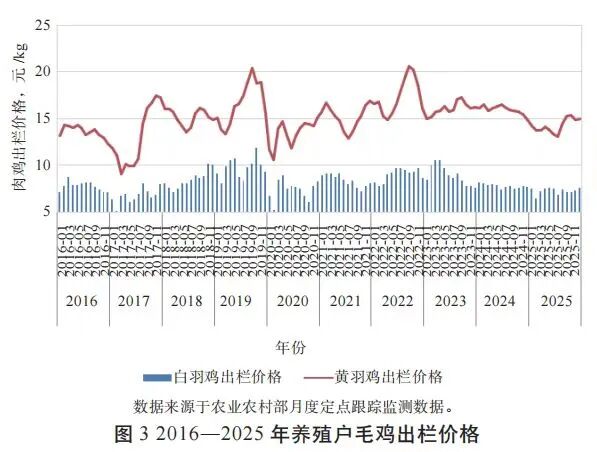
For yellow broilers, the average live price was CNY 14.28/kg (USD 1.99/kg), down 10.69% year on year. The report described a “V-shaped” pattern split around July: prices fell to a near five-year low of CNY 13.07/kg (USD 1.82/kg) in July, then rebounded to CNY 14.96/kg (USD 2.08/kg) by December, up 0.63% year on year.
Against that backdrop, average whole-chain returns declined sharply. The report said average returns in 2025 were CNY 0.63/bird (USD 0.09/bird) for white broilers and CNY 3.66/bird (USD 0.51/bird) for yellow broilers—down 17.11% and 20.41%, respectively, versus 2024.
“In the context of overall meat supply surplus, the broiler industry—driven by continued capacity expansion, especially the ultra-fast growth in 2025—has fallen into a situation of serious supply-demand imbalance, with both prices and profits under pressure,” the report said, describing a transmission chain of capacity expansion → price decline → profit erosion (and in some cases, rising losses).
Three recommendations: brand, differentiation, and going global
To lift quality and efficiency and expand value creation, the system offered three recommendations.
First, deepen brand building: improve standardised production systems, strengthen whole-chain quality control and full-process food safety traceability, and hold the line on product safety. The report also called for coordinated efforts by leading companies, industry associations, and government departments to build multi-layer brand portfolios—regional public brands, speciality-breed brands, and company product brands—supported by diversified marketing to improve consumer awareness and trust.
Second, promote differentiated development: define clearer positioning based on the complementarity between yellow and white broilers, and on the variety within yellow broilers. For yellow broilers in particular, the report urged more standardisation around breed naming and product standards, so breed characteristics can translate into competitive advantage and a market environment consumers can recognise and trust.
Third, expand exports and “go out” along the value chain: build on what the report called China’s structural advantages in global chicken trade, align more closely with international quality standards and consumer demand, and convert export potential into growth momentum. It also pointed to opportunities in Belt and Road partner countries where broiler industries are developing faster, and suggested leveraging China’s experience across breeding, farming technology, feed R&D, equipment, and business models to export a broader “China solution” for broiler production.
Domestic genetics: rising share, but reliance remains
The report also highlighted progress in domestic white broiler genetics. It said three domestic breeds—Shengze 901, Guangming 2 , and Wode 188—have gained market share since being approved by the National Committee for Livestock and Poultry Genetic Resources in December 2021, and together exceeded 30% market share by 2025.
However, the report said around 70% of white broiler genetics still depend on external sources, which it argued could limit the sector’s ability to maintain safe and stable operations in sudden scenarios such as import disruptions.
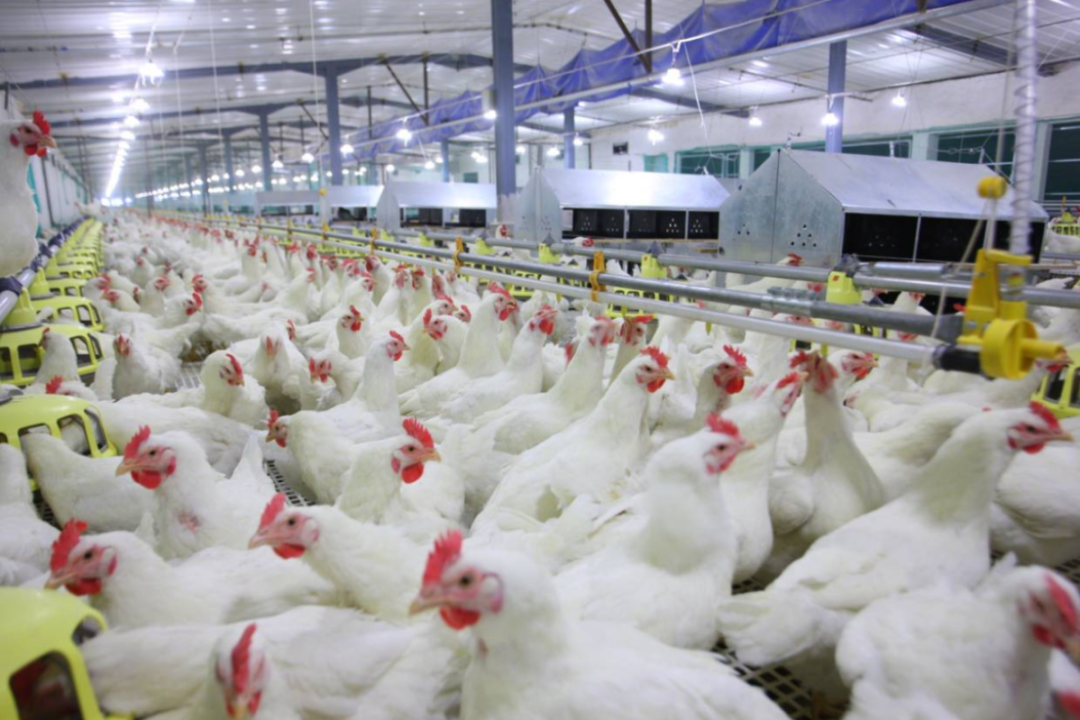
In 2025 white broiler GP replacement, the report said imported GP amounted to 628,400 sets, accounting for 39.92%, down 5.03 percentage points year on year. Meanwhile, domestically produced GP supplied by overseas breeds’ great-grandparent lines bred in China, plus the three domestic breeds combined, provided 945,700 sets, or 60.08%.
The report added that broader market acceptance for the three domestic breeds still faces constraints: on one hand, producers show both path dependence on imported breeds and a wait-and-see attitude, with limited understanding of the performance advantages of new domestic breeds; on the other hand, supporting systems—farming techniques, feed nutrition programmes, and other “matched” packages—still need improvement.
White broiler breeding is difficult, long-cycle, and costly, the report noted, adding that two international breeding giants, Aviagen and Cobb, have been able to spread and recover large upfront R&D costs over time. By contrast, it said China’s three domestic breeds are still in an early expansion phase—at a key window for technology iteration and market share competition—and argued that closing the gap with global leaders will require long-cycle support backed by both policy and industry capital.
AgriPost.CN – Your Second Brain in China’s Agri-food Industry, Empowering Global Collaborations in the Animal Protein Sector.