China’s hog market is expected to improve in the second half of the year, but the rebound is likely to be modest. Wang Zuli says the sector is still in a bottoming-out phase, with supply pressure remaining heavy due to relatively high breeding sow inventory and improved production efficiency. He expects hog prices to bottom out around the second quarter, supported by lower slaughter numbers and better consumption from around May. Even so, weak pork demand, high marketings, and rising feed costs continue to squeeze producers. He therefore urges the industry to cut outdated capacity, avoid speculative expansion, improve efficiency, and strengthen risk management.
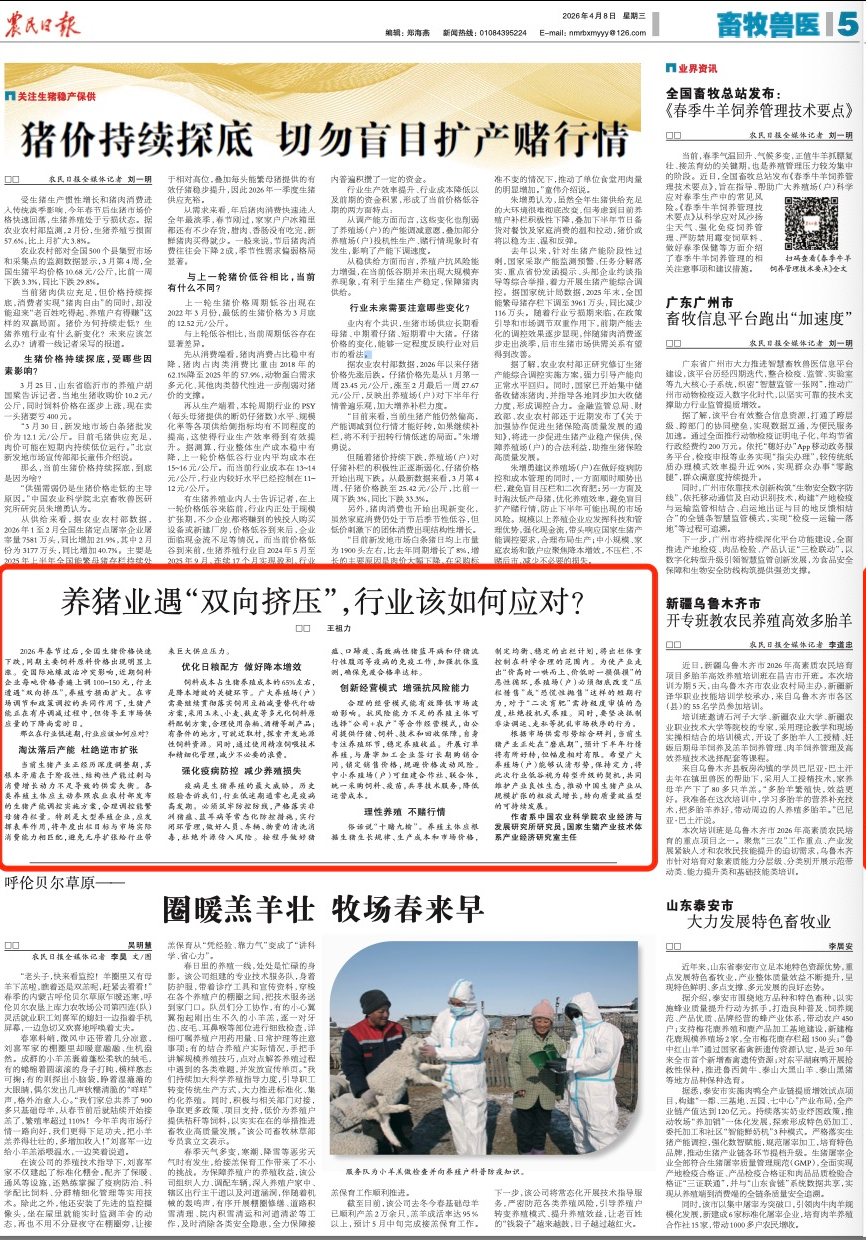
China’s hog sector is still in what can best be described as a bottoming-out phase, and although market conditions may improve in the second half of the year, the rebound is likely to be limited. That was the core message from Wang Zuli, researcher at the Institute of Agricultural Economics and Development of the Chinese Academy of Agricultural Sciences and head of the industrial economics section of the National Swine Industry Technology System, in a signed article published on April 8 in Farmers’ Daily and on China Agricultural News.
Wang wrote that, based on a combined assessment of supply and demand, pressure on the market remains substantial. China’s monthly average breeding sow inventory stood at 40.25 million head in 2025, only slightly below the 40.41 million head recorded in 2024. However, taking into account higher production efficiency, he believes hog supply pressure will still be considerable in 2026, with hog prices expected to remain under pressure and fluctuate at relatively low levels.
In terms of timing, Wang noted that since the end of September last year, China’s breeding sow inventory has shifted from year-on-year growth to decline. Based on a 10-month production cycle, that should theoretically translate into lower hog slaughter numbers around the second quarter. Combined with an expected improvement in consumption from around May, he expects hog prices to bottom out and start to recover around the second quarter.
He added that, excluding unusual factors such as disease outbreaks and secondary fattening, stronger consumption in the second half of the year, together with the gradual effect of capacity reduction, could leave some room for a rise in hog prices. Even so, because the reduction in current hog production capacity has been limited, he said the market should remain only cautiously optimistic about any upward move.
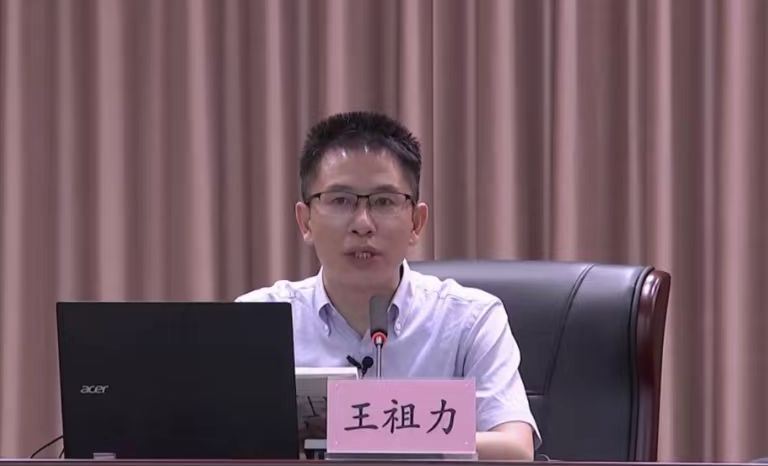
Wang Zuli
Wang also argued that China still has considerable room to reduce hog production capacity. By the end of 2025, the national breeding sow inventory had fallen to 39.61 million head, down 1.19 million head from the previous peak, under the combined influence of market forces and government policy. Even so, he said weaker-than-expected pork consumption and gains in production efficiency mean current capacity is still too high.
That imbalance is already being felt across the sector. Weak consumption and high marketings have pushed the industry into loss-making territory. According to data from the National Bureau of Statistics, China’s per capita household pork consumption fell to 26.6 kg in 2025, down 5.4% year on year, marking a second consecutive annual decline. After the Chinese New Year, pork consumption also enters its traditional seasonal low, with household purchasing demand falling sharply and offering little support to hog prices.

At the same time, the previously high level of production capacity means hog marketings in the first few months of 2026 are set to remain elevated. On top of that, weaker expectations for the market outlook and growing concerns about higher feed raw material prices have prompted many producers to accelerate sales, adding short-term supply and further increasing downward pressure on prices.
Wang described the combination of sharply falling hog prices after the 2026 Chinese New Year and a notable rise in major feed raw material prices as a case of the industry being squeezed from both sides. In his view, production capacity is being reduced in an orderly way under both market adjustment and policy guidance, but it will still take time before that feeds through into lower market supply.
So what should the industry do now? Wang’s article set out several recommendations, including eliminating outdated capacity, avoiding expansion against the market trend, optimising feed formulas to improve efficiency and lower costs, and adopting business models that strengthen resilience against risk.
He said all types of producers should actively refer to the Ministry of Agriculture and Rural Affairs’ hog production capacity control plan and adjust breeding sow numbers accordingly. Large-scale pig companies in particular, he wrote, should set an example by aligning annual slaughter targets with actual market demand, rather than adding to supply pressure through disorderly expansion.
For producers with weaker risk resilience, Wang suggested cooperative models such as the Company + farmer model, allowing them to focus on the production side and stabilise returns. Small and medium-sized farms, he added, can also form cooperatives or alliances to purchase feed and vaccines jointly, share technical services, and reduce operating costs.
The article also stressed that producers should arrange their production schedules rationally, abandon speculative thinking, and avoid blindly betting on a stronger market in the second half. To break the vicious cycle of everyone expanding when prices are high and everyone suffering when prices are low, Wang wrote, the industry must move away from short-term behaviour such as holding back pigs in hopes of higher prices or resorting to panic selling. He added that producers should be extremely cautious about secondary fattening and reject speculative production altogether.
Wang also revealed that the Ministry of Agriculture and Rural Affairs is studying revisions to its comprehensive hog production capacity control plan in an effort to guide capacity back toward normal levels more forcefully. He called on producers to recognise the current situation, stay calm, and treat this downturn as an opportunity for transformation , and jointly maintain a sound industry ecosystem.
Only in that way, he suggested, can China’s hog industry move away from extensive growth driven by scale expansion and towards more sustainable development based on quality and efficiency.
AgriPost.CN – Your Second Brain in China’s Agri-food Industry, Empowering Global Collaborations in the Animal Protein Sector.