Wellhope chairman Jin Weidong argues that high-quality development in poultry requires the courage not to grow, production aligned with demand, and greater attention to trust and reputation. Speaking at a November 9, 2026 industry conference, he set out three criteria for development. Executives from Wens, Sunner, Lihua and Ecolovo also discussed their priorities.
“At industry meetings today, whatever the sector, everyone talks about high-quality development. But what does it mean? Views differ, and I think most miss the point. Some even run counter to it.”
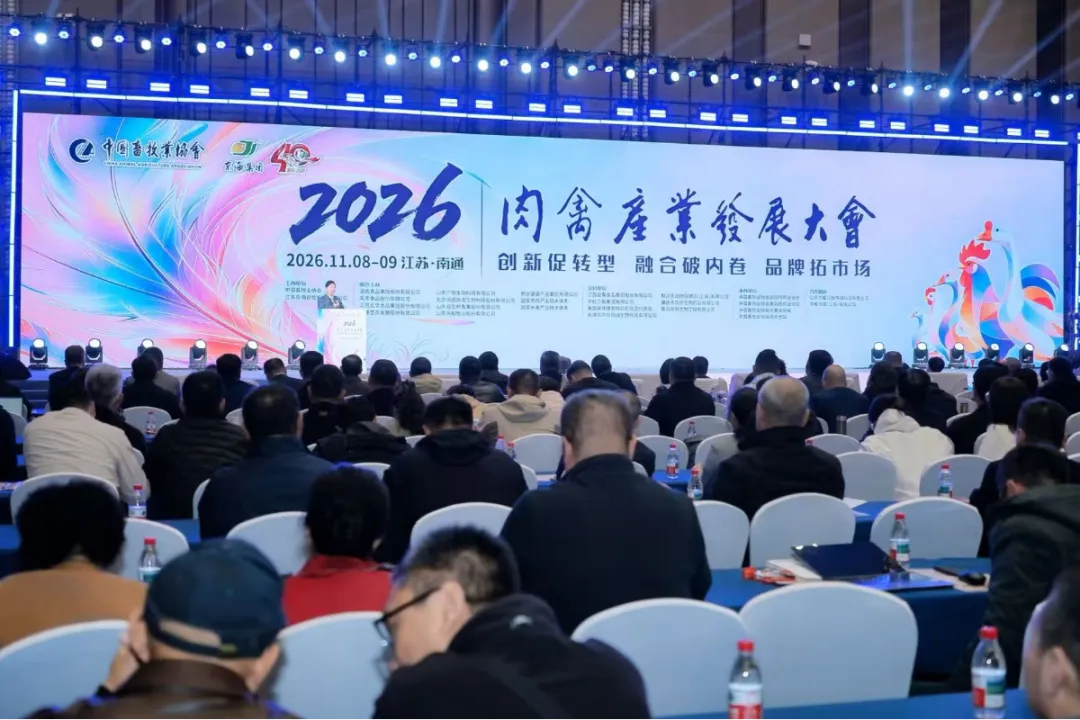
Jin Weidong, chairman of Wellhope Foods Co., Ltd., made the remarks in his introductory presentation on paths to high-quality development for poultry meat businesses during a roundtable at the 2026 Meat Poultry Industry Development Conference on 9 November. Wellhope is China’s largest white-feathered broiler company by slaughter volume, processing around one billion birds a year.
In Jin’s view, the industry’s biggest problem is neither excess capacity, a lack of resources nor weak consumption, but a failure to understand high-quality development. Many companies equate it with expanding scale, improving efficiency and reducing costs. “All three matter, of course, but if those are the only things you do, high-quality development remains a veneer,” he said.
He offered three criteria that he acknowledged were somewhat unconventional.
First, “high-quality development actually means daring not to grow”. Jin said the pursuit of growth was a common entrepreneurial instinct, driven by capital markets’ demands for greater scale year after year and governments’ calls for continued investment and capacity expansion. Yet “the stronger force is entrepreneurs’ own boundless desire”. Citing Schopenhauer, he described the two extremes of desire: agitation when it is unfulfilled and boredom when it is satisfied. “Those with the greatest desires swing furthest between agitation and boredom.” Failure to restrain those desires, produce in line with demand and operate at an appropriate scale, combined with reckless borrowing, had turned “generation after generation of pioneers into casualties”.

Jin Weidong speaking at the 2026 Meat Poultry Industry Development Conference
Second, companies should look beyond financial measures to the qualities of the business itself. Entrepreneurs study three statements: the balance sheet, the income statement and the cash flow statement. But “a company’s people, values, integrity and reputation are not in those reports. We focus on accumulating the cold figures they record, while neglecting the reputation, quality and integrity that determine our long-term competitiveness.”
His definition of “high quality” was therefore “a business that is liked, recognised and trusted, rather than one that is large, makes more money or even appears competitive”.
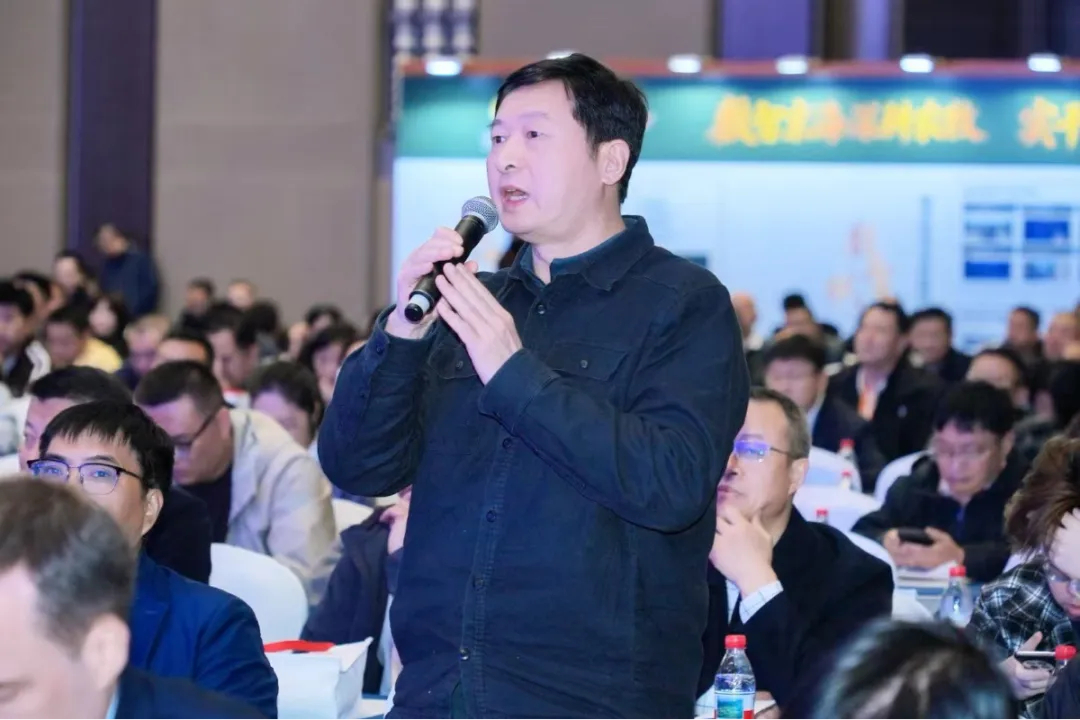
Third, businesses should shift from pursuing their own goals to serving others. Jin drew an analogy with words he attributed to Merck’s founder: medicines are made for patients, rather than profits, and profits will follow when patients’ suffering is relieved. The same principle applied to poultry: “We produce meat and eggs for the market and for consumers, not for profits or financial statements.”
By that measure, Jin questioned the direction of current efforts to “press ahead even if it means creating difficulties where none exist, create demand where there is none, and find every possible way to make people eat more meat”. After three or four decades of rapid expansion, “supply now exceeds demand and there is excess capacity”. What businesses should do, he said, was meet demand and make life better.
Five companies and five sets of priorities
The roundtable’s moderator, Cai Huiyi, president of the China Animal Agriculture Association, began by asking what companies were focusing on and keeping busy with. Five leading listed poultry meat companies each gave their answer.
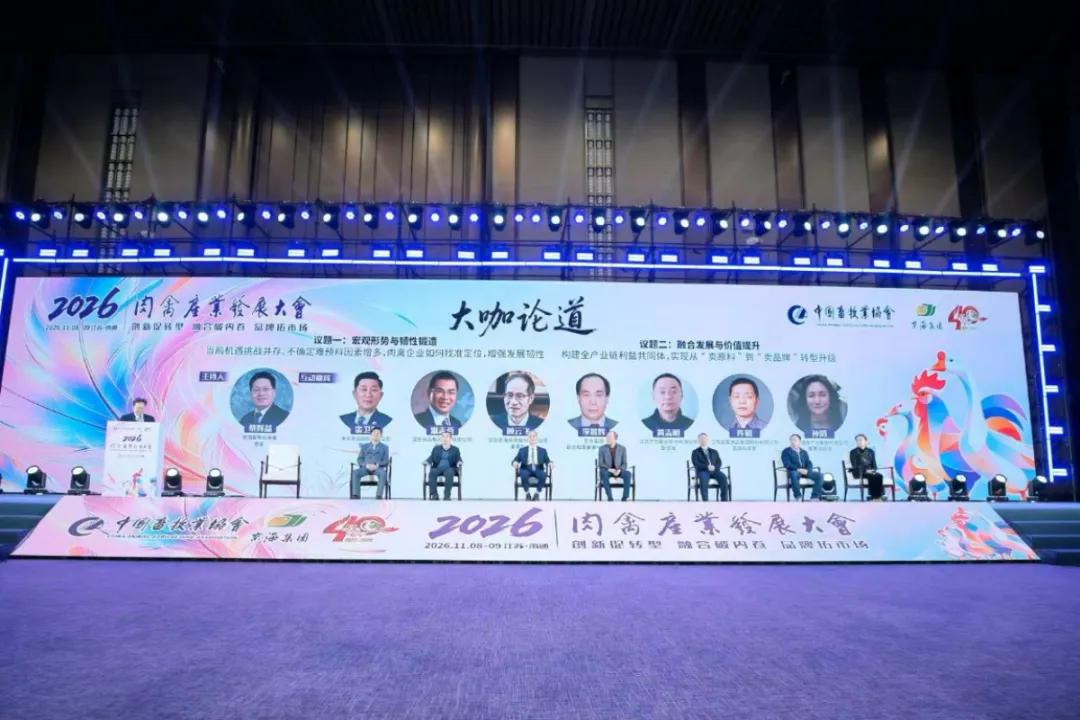
Wens seeks higher selling prices
Wen Zhifen, chairman of Wens Foodstuff Group, started with a figure: the company’s poultry meat output this year “may reach 1.3 billion birds”. Its product lines extend beyond yellow-feathered chickens to waterfowl, Muscovy ducks, white-feathered chickens and 817 crossbred chickens.
He was candid about the calls to cut capacity that dominated the conference. Once businesses have reached scale, he said, reducing it “may not be realistic”: cuts would raise costs, and “once costs rise, competitiveness is gone”. His alternative was to work out “how to sell products at higher prices”.
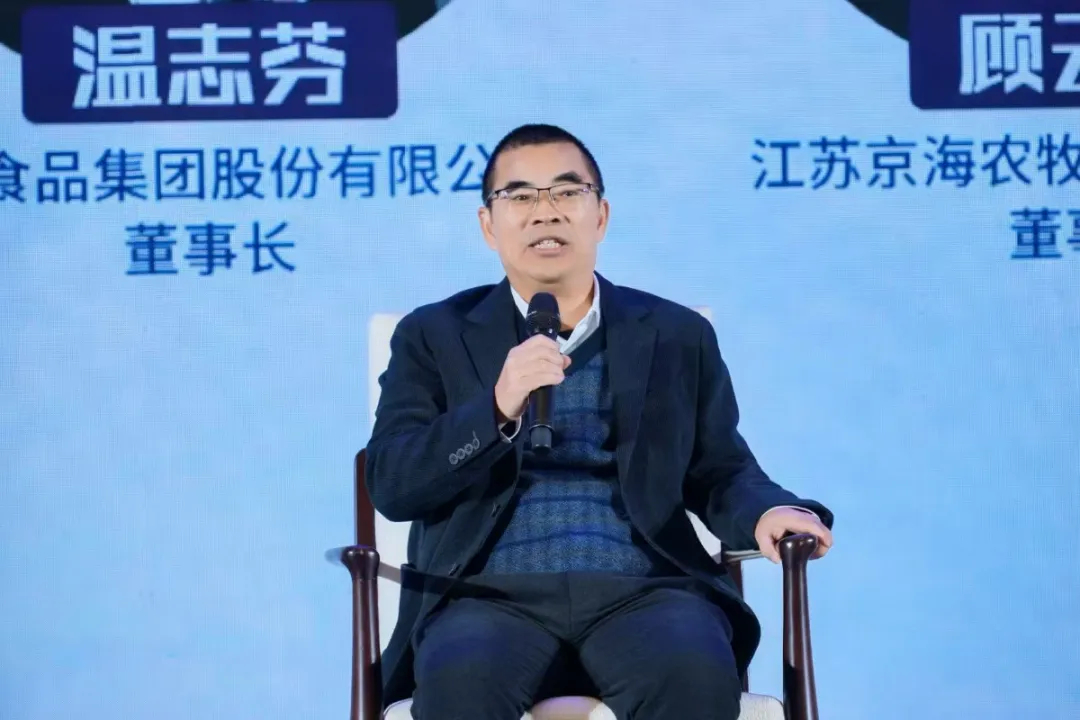
Wen Zhifen
Wens is concentrating on three areas. Costs must be low enough: “If they are not, we can easily be forced out.” Quality should not be determined by cost alone. Its yellow-feathered chicken range includes birds reared for more than 60 days, more than 80 days and more than 180 days. “Whatever consumers need, that is what we produce.” In marketing, Wen described three stages of the company’s sales development: version 1.0 was selling wholesale at the farm gate and taking no further interest once products left; version 2.0 was managing wholesale operations with attention to market demand and production schedules; version 3.0 focuses on brands and stories that give products emotional value.
Consumers can judge tangible value, such as a slightly lower cost or higher quality, for themselves, he said. But emotional value needs to be communicated: “If you do not promote it yourself … consumers really will not know.”
Wellhope builds its capabilities during the downturn
Jin’s answer at this stage was brief. Under pressure in an industry downturn, Wellhope was strengthening internal management and capabilities. In practical terms, it had increased the scope, intensity and effort devoted to staff training.
A question from the audience about overseas expansion prompted a fuller response. “There is a saying now that you will be forced out if you do not go overseas. But once you do, you find that the vast ocean is not out there. China is the ocean.” A large company expanding abroad could “quickly saturate an entire country’s market”, he argued. China, by contrast, offers a vast, unified market with a common legal framework, common rules and a common language. “There is no second example in the world.”
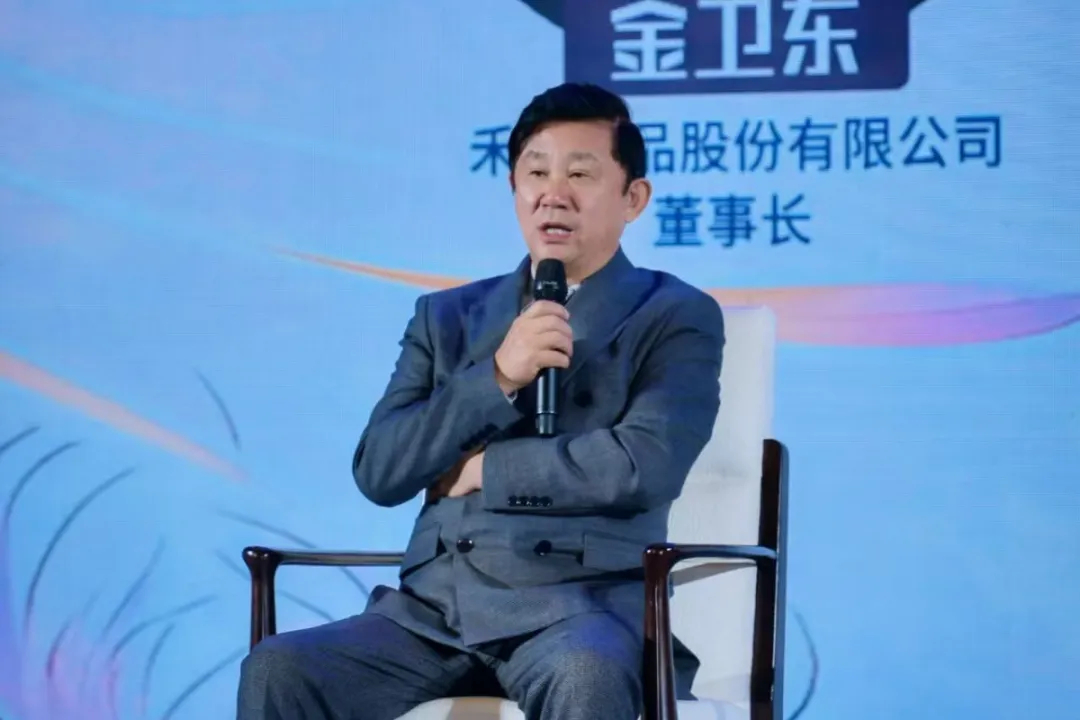
Jin Weidong
For those that do go abroad, Jin recommended preparing in three areas: command of professional knowledge, because “the other side respects you because you are stronger”; cultural understanding, including local culture, religion, beliefs, history and ethnicity; and the ability to communicate in the local language. He compared it to a relationship: “You cannot rely on an interpreter when you are dating.” Business partnerships were far more complicated. “If dating does not work out, you can break up; if a marriage does not work out, you can divorce. But once you invest abroad, if you later want to end the partnership, there may be no going back, and you could lose your entire investment.”
Sunner turns raw materials into consumer products
Speaking for Sunner was Li Jinghui, the group’s vice-president and special assistant to the chairman, who previously served as president of the China White-feathered Broiler Alliance. He grouped the company’s longstanding internal priorities into three areas. The first was breeding, with the company providing whatever support the work requires. Genetic progress in recent years had become a foundation for Sunner’s steady development. Second, since the younger generation took over, digital management and AI applications had spread throughout the company. Third, Sunner was working to turn chicken raw materials into processed, value-added products for consumers.

Li Jinghui
At industry level, he again called strongly for change. “We are already competing this intensely, yet we keep driving the competition further. Why not transform now? Why not integrate closely? Isn’t Sunner itself an example?”
Lihua examines individual market segments
Huang Zhiming, vice-president of Lihua, said yellow-feathered chickens accounted for nearly 70% of the company’s total revenue. Its priorities therefore differed from those of businesses focused on white-feathered chickens. “They may pay more attention to the overall market, while a business like ours focuses more on market segments.” Markets for yellow-feathered chickens differ between regions, as do younger and older consumers’ perceptions of the products. “We break the market down and look at it at a more detailed level.”
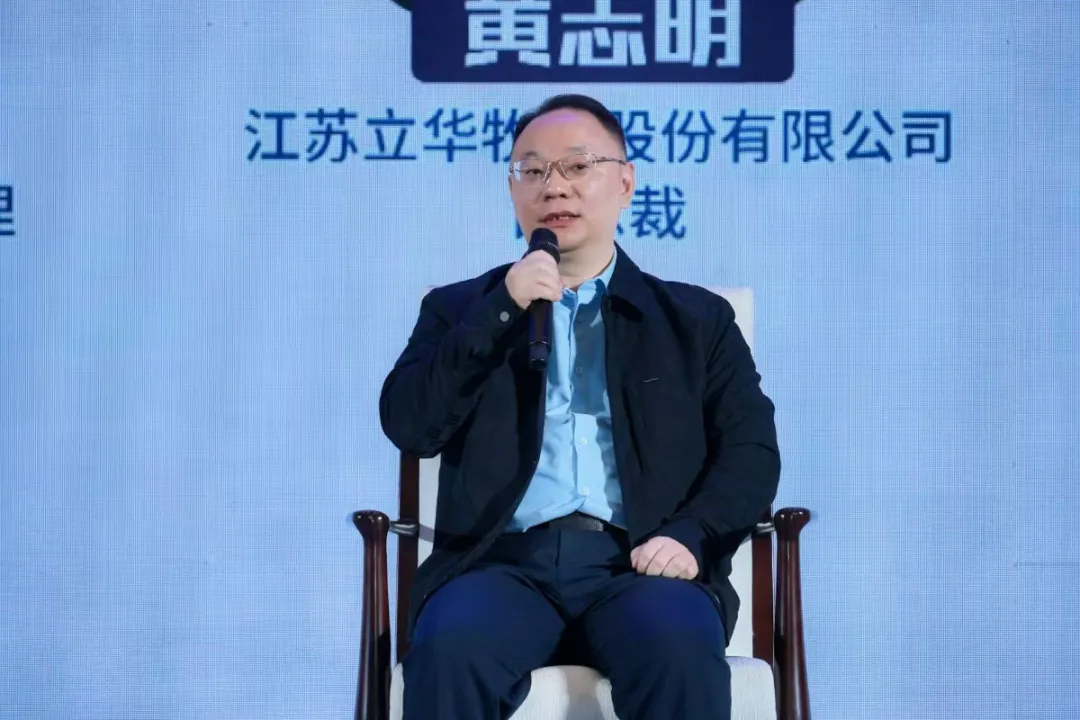
Huang Zhiming
Three tasks follow from that approach: studying consumption behaviour and occasions; examining the product delivery process; and developing and innovating products around new market needs, delivery requirements and the characteristics of distribution channels.
Ecolovo seeks agreement on the ceiling for duck consumption
Representing the meat duck industry, Xu Yi, chief scientist at Ecolovo Foods, said the company was pursuing three main areas of work on high-quality development. The first was agreement on the industry’s outlook: the ceiling for white-feathered meat duck consumption “may be 3.5 billion birds, and that ceiling may still be falling”. “Only once we reach a common understanding will companies stop expanding capacity blindly and the industry remain relatively stable.”
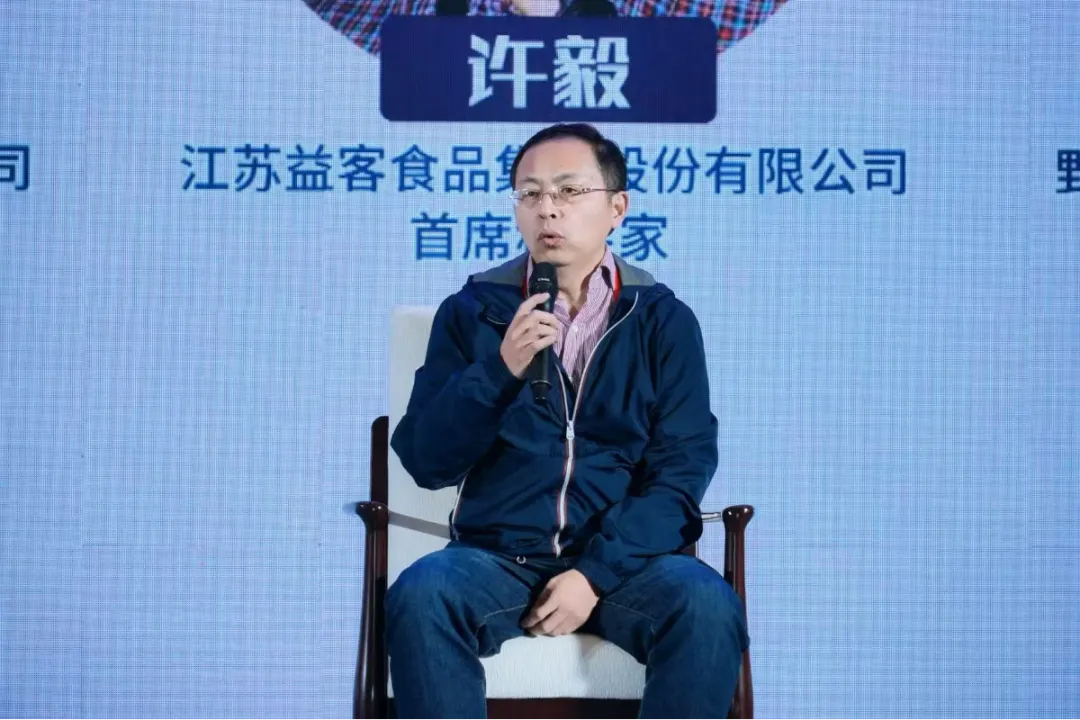
Xu Yi
Ecolovo is also bringing together companies, universities and research institutes in Shandong to explore high-quality development for white-feathered meat ducks, Xu said. In addition, it is learning from Sunner and other strong white-feathered broiler businesses in consumer foods, seeking to connect the duck industry more effectively with end consumers, develop flagship products and let food products drive the whole value chain.
AgriPost.CN – Your Second Brain in China’s Agri-food Industry, Empowering Global Collaborations in the Animal Protein Sector.