China’s national beef cattle nutrition standard took effect on October 1, 2026, setting requirements by frame size and production stage. A separate draft cattle slaughter code would extend quality management across processing. The report looks at both measures in the context of the industry’s return to profitability and the three-year beef import safeguard.
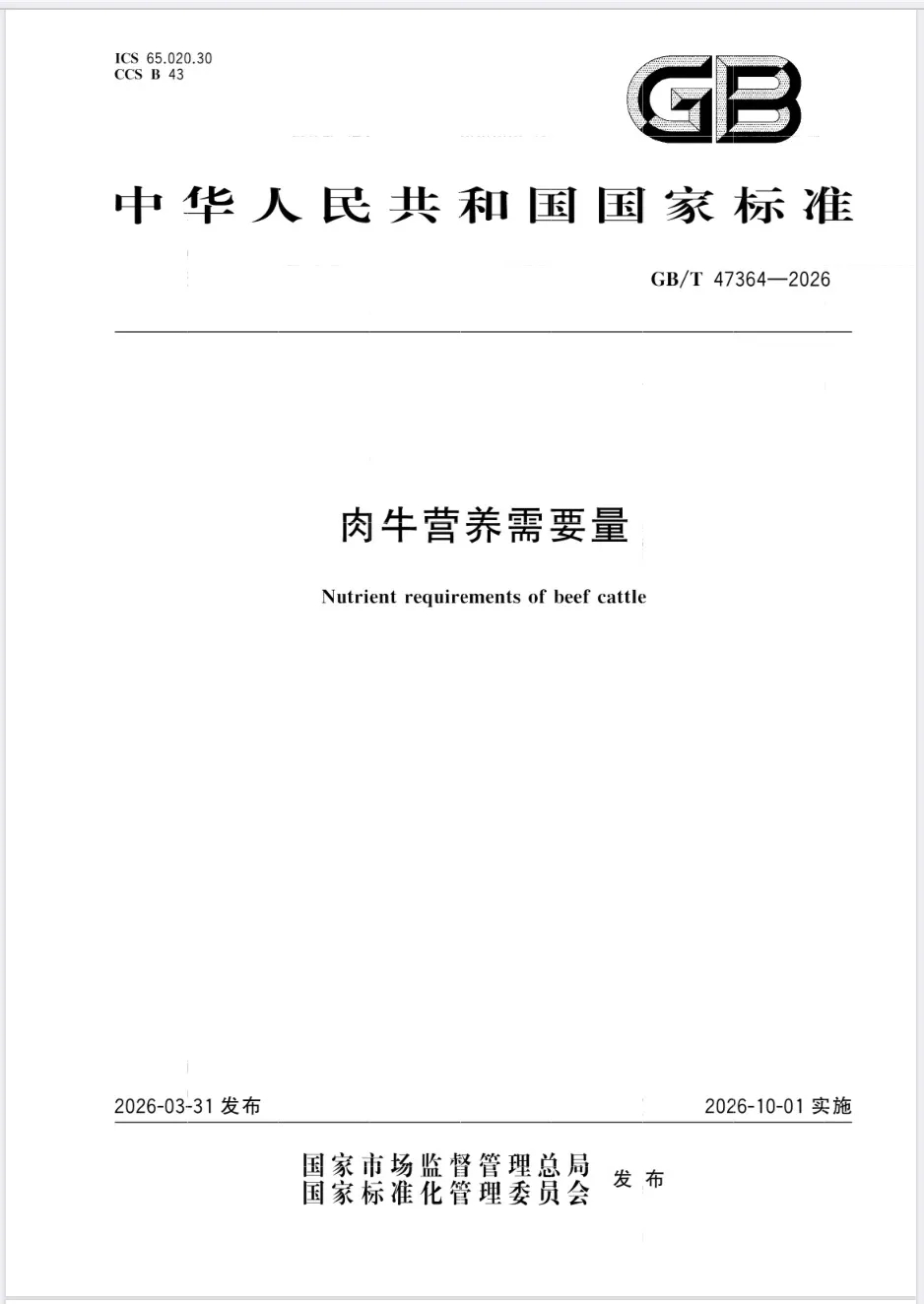
Over the past year, China’s beef cattle industry has experienced two unusual developments at once. It returned to profitability after two years of heavy losses, and national authorities moved to standardize feeding and slaughter. The national standard Nutrient Requirements of Beef Cattle (GB/T 47364–2026) was issued in late March 2026 and took effect on October 1. In late October, the Bureau of Animal Husbandry and Veterinary Affairs at the Ministry of Agriculture and Rural Affairs (MARA) opened a public consultation on its draft Cattle Slaughter Quality Management Code, with comments due by November 30.
One document covers feeding and the other slaughter. Together, they apply lessons from years of losses to setting standards across the beef cattle supply chain.
Producers and processors need financial room to cover the cost of upgrades. The market recovery over the past year helps explain why the changes are coming now.
From late 2022 through the first quarter of 2025, a relatively large domestic cattle sector and a sharp increase in beef imports helped push beef prices steadily lower, hitting cattle farms hard. Beef was China’s largest meat import by volume in 2023. In the first half of 2024, beef imports were more than double their volume in the same period of 2019. By the end of 2024, beef prices had hit a five-year low and live cattle prices a ten-year low. China Animal Agriculture Association data show that producers lost more than CNY 1,000 (about USD 149) per animal marketed in 2024. Farms that breed and raise their own cattle posted losses for 21 months starting in July 2023.

The market turned in the second quarter of 2025. The Price Monitoring Center of the National Development and Reform Commission attributed the start of a cyclical rise in beef prices that quarter to capacity cuts, consumer demand and import safeguards. It expects prices to keep rising through 2027. MARA figures show beef cattle farms stayed profitable for nine consecutive months from April 2025 and averaged a profit of CNY 539 (about USD 80) per animal marketed over the full year. The recovery accelerated in 2026, and profit per head climbed back above CNY 2,000 (about USD 298) at one point.
Policy has supported the turnaround. China’s Ministry of Commerce launched a safeguard investigation into beef imports in December 2024 under World Trade Organization rules. In January 2026, China introduced a three-year safeguard based on country-specific import quotas, with an additional 55% tariff on out-of-quota beef. The two new documents followed during that window for the industry to adapt.
Feeding tables tailored to Chinese cattle
The project to develop the national standard Nutrient Requirements of Beef Cattle (GB/T 47364–2026) was approved in March 2024. Professor Zhou Zhenming, director of China Agricultural University’s Beef Cattle Research Center, led a team drawn from eight universities and research institutes and eight large beef cattle companies. The academic and research partners included China Agricultural University, Sichuan Agricultural University, Jiangxi Agricultural University and Beijing University of Agriculture.
The standard ends the sector’s longstanding reliance on foreign feeding standards. Until now, farmers and companies lacked a precision nutrition system tailored to local conditions and had to apply the US nutrient requirements published by the National Academies of Sciences, Engineering, and Medicine (NASEM), following earlier editions issued under the National Research Council (NRC) name. China has 57 local yellow cattle breeds in addition to imported and domestically developed breeds, with wide differences in frame size. Foreign standards also made it difficult to use abundant local feed resources effectively, including crop straw and residues from brewing and other processing.
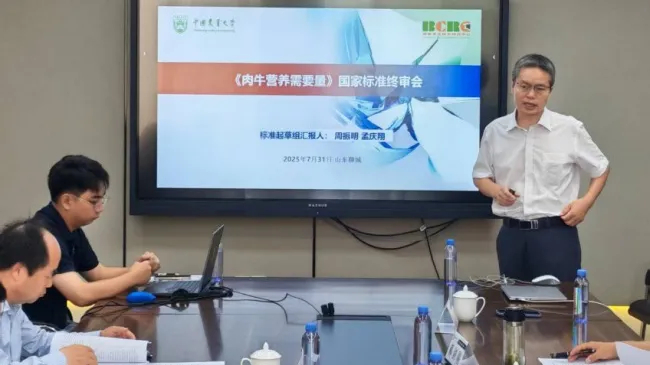
The standard makes cattle nutrition easier to apply in three ways.
First, it groups cattle by frame size: small, medium and large. The system accounts for traits shared by purebred and crossbred cattle and gives farmers a straightforward way to choose the right category without working through long lists of breeds.
Second, it uses the internationally adopted net energy system to calculate energy for maintenance and for weight gain separately. For the first time, it sets different energy requirements by frame size and for bulls, females and steers, taking account of their physiological differences. This lets producers formulate rations to match the animals’ requirements more precisely.
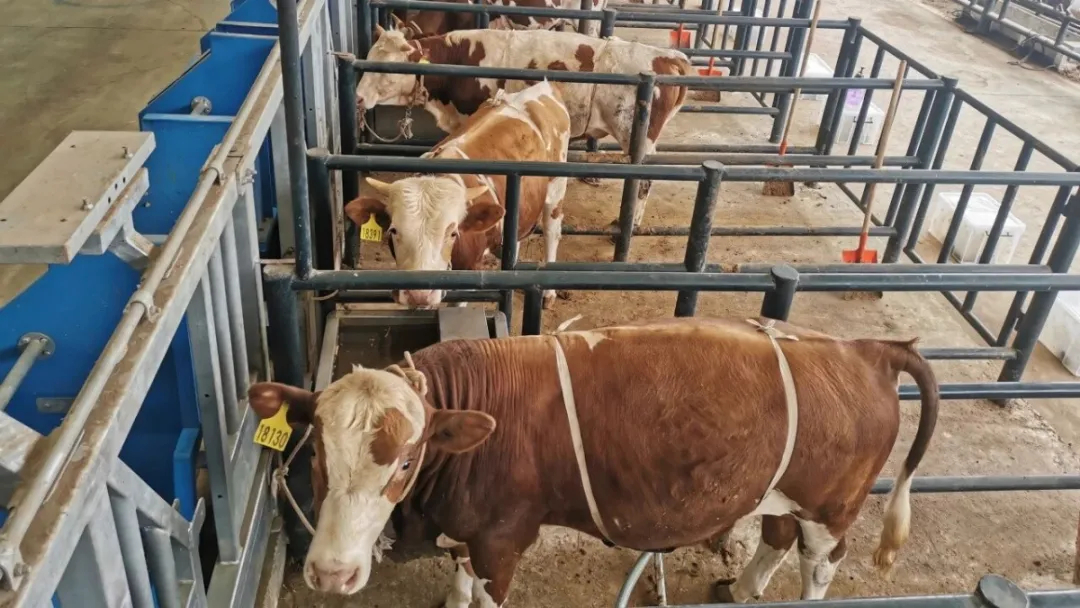
Third, the standard gives farmers and feed mills tables they can consult directly. The tables cover calves, growing cattle, finishing cattle, heifers and mature cows. For each stage, they list daily requirements for different body weights and target daily gains, including dry matter intake, net energy for maintenance, net energy for gain, crude protein, metabolizable protein, amino acids, calcium and phosphorus. The article describes these daily values as being listed in grams. Producers and feed mills can look up the figures for the animals they are feeding.
Estimates suggest precision rations based on the new standard could improve feed conversion by about 8–12%, raise average daily gain from the conventional 1.0 kg to 1.3–1.5 kg and shorten finishing by 20–30 days. Marketing a finishing animal one day earlier could save CNY 15–20 (about USD 2.23–2.98) in feed per head. Nationwide savings for farmers could exceed CNY 10 billion (about USD 1.49 billion) a year. With feed accounting for more than 70% of the total cost of raising beef cattle, the new tables address the costliest part of production and one that has long relied on less precise practices.
Quality management across the slaughter process
Work on slaughter standards accelerated over the past year, almost in parallel with the feeding standard. On March 28, 2026, MARA Announcement No. 1004 issued five sets of procedures, including the Procedures for Meat Quality Inspection at Cattle Slaughter (Trial). On October 29, the ministry’s Bureau of Animal Husbandry and Veterinary Affairs invited public comment on draft quality management codes for cattle and sheep slaughter.
The draft code would extend oversight from meat quality inspection to the full slaughter process. It contains 60 articles in ten chapters. The proposed requirements fall into five main areas.
Personnel. Plants must designate a person responsible for quality and safety. That person must have at least a junior college qualification and two years of experience managing slaughter quality and safety, or three years of experience if they fall short of the education requirement. They must also pass the veterinary hygiene inspector assessment organized by the agricultural and rural affairs authorities. Plants must staff at least four veterinary hygiene inspectors if they slaughter more than 100 cattle a day, at least three for 10–100 cattle and at least two for no more than 10 cattle. Inspectors must meet the occupational skill requirements for veterinary hygiene inspectors in cattle and sheep slaughter (NY/T 4651) and pass the assessment. Employees must undergo a health check and screening for zoonotic diseases such as brucellosis at least once a year.
Equipment. Plants must use suspended slaughter lines. Obsolete processes and equipment listed in the Catalogue for Guiding Industrial Restructuring, including manual floor slaughter using the rolling method, are prohibited. Inspection laboratories must be able to run rapid tests for banned lean-meat agents. Water for washing must be at least 40°C and hot water for disinfection at least 82°C.
Process. Slaughter procedures must follow GB/T 19477, the operating standard for cattle slaughter. Plants must provide post-mortem inspection stations for heads and feet, viscera and carcasses, along with reinspection. Animals and carcasses are subject to ante-mortem and post-mortem inspection. Products that pass receive a quarantine certificate and a meat quality inspection certificate.
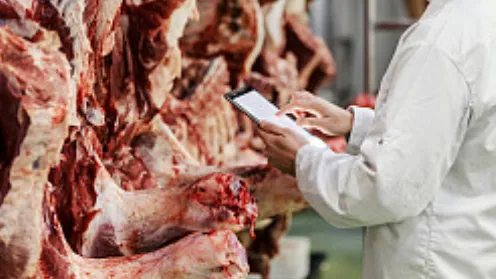
Traceability. Plants must log checks on incoming cattle and record outgoing products, with systems in place to trace products back to their origin and forward to their destination and to recall them when necessary. Recalled products must be safely disposed of to keep them out of the market.
Records. All records must be kept for at least one year. Digital recordkeeping is encouraged, and electronic records carry the same weight as paper records.
The feeding standard sets out what cattle should eat and how much. The draft slaughter code covers how cattle enter the plant, how they are slaughtered, how products leave and how those products are recalled if a problem arises. It would move cattle slaughter from company self-regulation toward a system that can be inspected and under which companies can be held accountable.
How the recovery, import safeguards and standards support industry upgrades
The past year’s market recovery and regulatory changes show how the industry is being steered toward higher standards.
Years of heavy losses left the sector with little room to upgrade facilities and equipment. Sustained profitability on farms gives the sector an economic basis for slaughter plants to retrofit suspended lines, expand inspection laboratories and assess staff qualifications.
The import safeguard gives the industry time to change. Authorities described the three-year measure as a way to give the industry time and space to recover and develop. In its analysis, Economic Daily warned the industry against relying on the market recovery alone. It urged companies to use the hard-won window to step up efforts to restructure and upgrade.

Common quality and safety standards fill a gap that has held back the shift from expanding capacity to improving quality and efficiency. One document addresses production at the farm, the other processing at the plant, with meat quality inspection procedures linking the two. The pieces of a system covering feeding through slaughter are falling into place.
Changes in consumer demand point in the same direction. The national beef cattle and yak industry technology system’s 2025 annual report put total Chinese beef consumption that year at 10.812 million tonnes, up 1.4% year on year. Changing consumer preferences are driving demand for more precise cutting and packaging by grade. E-commerce and community group buying have increased demand for smaller packs and more precisely portioned cuts, raising expectations for appearance and how well products keep their freshness. MARA has previously called for developing and revising quality grading standards for domestic beef so that higher quality can command higher prices. Ultimately, the aim is for consumers to pay for good beef produced to consistent standards.
At the root of the last downturn was a beef cattle industry that had prioritized volume over efficiency as it expanded rapidly. Pressure from imports exposed that structural weakness. The recovery has given producers breathing room, the safeguard has given them time to adapt, and the two national documents give them a framework to work within. For an industry looking for stability through the market cycle, these standards may prove a better bet than prices alone.
AgriPost.CN – Your Second Brain in China’s Agri-food Industry, Empowering Global Collaborations in the Animal Protein Sector.