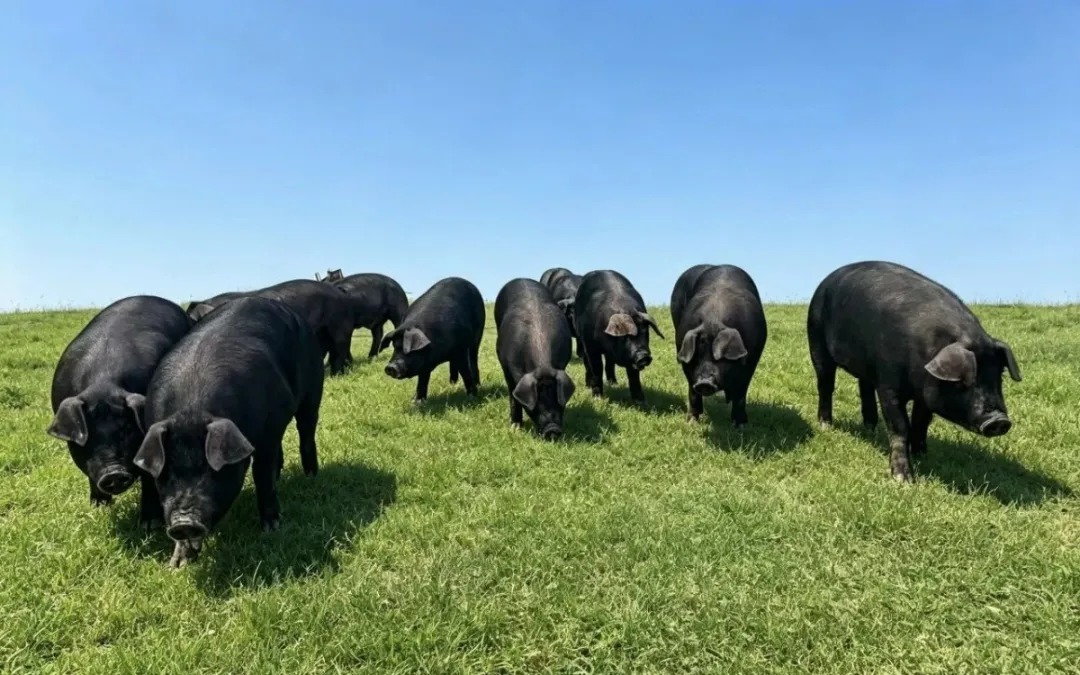
Wens expects China’s pig prices to reach a stabilising turning point around Chinese New Year after a prolonged downturn. The company sees accelerating capacity reduction as financial pressure builds across the industry and expects competition to gradually shift from scale expansion towards cost efficiency and quality. Meanwhile, Wens is advancing its overseas strategy, with Vietnam serving as its first market for international expansion.
Chinese pig producer Wens expects pig prices to reach a turning point around Chinese New Year after an extended period at low levels.
The company made the comments during a recent roadshow for institutional investors. Wens said there remains some disagreement between the industry and the market over exactly when the current hog cycle will reverse, and how strong the recovery will be. Its preliminary expectation is that pig prices could reach a turning point and begin stabilising around Chinese New Year.

The industry broadly expects a relatively high degree of certainty that the sector will return to profitability in 2027, according to Wens. The level of profitability, however, will depend on pig price developments in the 3rd and 4th quarters of this year, as well as the pace at which production capacity is reduced.
Historical experience suggests that the longer pig prices remain at low levels, the more thoroughly capacity will be removed, creating greater momentum for a subsequent price recovery, Wens said.
“If the industry as a whole still fails to achieve profitability next year, there will be widespread capacity exits, after which pig prices could enter a period of rapid increases,” the company said.
Why capacity reduction has taken longer
Wens pointed to 3 factors that could explain why production capacity has been relatively slow to leave the industry during the current downturn.
First, concentration in China’s pig industry has continued to increase in recent years. Leading companies have relatively broad access to financing and are therefore considerably better equipped to withstand a downturn than an industry dominated by small-scale producers.
Second, companies that generated profits during the preceding period still have relatively strong financial reserves.
Third, some market participants have continued to take their chances, hoping that competitors will exit the market first while they themselves expand production against the market trend.

Taken together, those factors have prolonged the current loss-making period, Wens said. As losses continue, however, financial pressure is increasingly becoming visible among some industry participants, and the pace of capacity reduction is expected to accelerate.
Wens stressed that the current capacity reduction is genuine and is moving forward effectively, driven by a combination of government policy and market forces.
On the policy side, the national government has attached considerable importance to regulating hog production capacity, introducing various measures and plans with strong implementation. At the market level, the industry has been losing money for several consecutive months, creating substantial financial pressure and giving producers sufficient incentive to exit the market voluntarily.
From scale competition to quality
As the industry’s capacity-control mechanism gradually takes effect, Wens expects disorderly competition to decline substantially and a relatively stable competitive landscape to emerge.
That could narrow the fluctuations of the hog cycle and move the industry towards a more stable phase in which producers earn reasonable returns. Participants with a cost advantage could achieve returns above the industry average.
Wens expects competition in the sector to shift from a race for scale towards a focus on quality, with companies continuing to reduce costs, improve efficiency, and pursue higher-quality development.
Vietnam first step in overseas expansion
Wens also provided an update on its international expansion plans. The company has completed an assessment of major regional markets worldwide and intends to use several approaches simultaneously.
These include building its own breeding farms, exporting production standards, cooperating with leading local companies, and pursuing mergers and acquisitions, depending on conditions in individual markets.
Vietnam has been selected as the company’s first overseas market, allowing Wens to gain experience before expanding further. Other Southeast Asian countries are also under consideration, while the company is exploring smaller regional projects with strong profitability potential.
Wens has already established the team for its chicken production project in Vietnam and completed registration of a wholly owned overseas company. The project will mainly raise yellow broilers suited to mainstream local demand.
AgriPost.CN – Your Second Brain in China’s Agri-food Industry, Empowering Global Collaborations in the Animal Protein Sector.