New Hope Liuhe will prioritise breeding-stock improvement in 2026, targeting a CNY 1.0–1.5/kg (USD 0.14–0.21/kg) cost cut. It expects a 2025 loss of CNY 1.5–1.8 billion (USD 208.91–250.70 million) amid one-offs and a Q4 hog-price drop, while reporting lower finishing costs and aiming to lift 2026 feed sales by about 3 million tonnes.
At an analyst meeting held on January 30, New Hope Liuhe said it will put breeding-stock improvement at the centre of its pig business in 2026, aiming to cut costs by CNY 1.00–1.50 per kg (USD 0.14–0.21/kg). The company expects to push on multiple levers, including health management, production management, and genetic improvement.
CFO Shi Han also offered an early read on 2025 results, saying the company expects a loss of CNY 1.50–1.80 billion (USD 208.91–250.70 million). Part of that, he said, stems from one-off impacts, including industry adjustments in the second half of last year and New Hope’s planned shift toward better breeding stock. As part of that shift, the company disposed of some low-efficiency breeding animals, booked impairment provisions, and exited certain low-efficiency assets.

A sharp drop in hog prices in the fourth quarter added pressure as well, pushing part of the company’s normal operations into the red. Even so, Shi said New Hope made “a lot of improvements and upgrades” in its own operations over the year.
Costs kept moving down, month by month
Across farms in normal operation, New Hope said the fully loaded cost for finishing pigs fell by CNY 0.10–0.15/kg per month (USD 0.01–0.02/kg). By December, that figure had dropped to CNY 12.20/kg (USD 1.70/kg), largely delivering on the cost-reduction target set at the start of the year.
On piglet supply, the company said its average seedstock/piglet cost in 2025 fell to below CNY 2.60/kg (below USD 0.36/kg), down CNY 0.60/kg year-on-year (USD 0.08/kg). Shi linked that decline to improvements such as higher piglets alive per litter, higher litter size at weaning, better gilt entry rates, and broader progress in the sow herd.
Feed cost in pig production also declined, down CNY 0.80/kg year-on-year (USD 0.11/kg). New Hope attributed that to better feed conversion ratio (FCR) — with December’s FCR nearly 0.1 lower than January’s — as well as improvements in the boar population and semen quality.
Idle capacity: more self-finishing, more partnerships
On dealing with idle capacity, New Hope said it has mainly been activating part of its finishing sites by raising the share of self-breeding and self-raising. The self-finishing ratio increased from 32% at the start of 2025 to nearly 40% by year-end.
The company added that it is also discussing cooperation with industry partners. That includes smaller, piecemeal collaborations via leasing arrangements, as well as talks around larger asset partnerships. New Hope said it will disclose details once outcomes are sufficiently certain and meet disclosure requirements.
Feed: aiming for another big year in 2026
For feed, Shi said New Hope hopes total sales volume in 2026 will grow by about 3 million tonnes, implying another year of double-digit growth versus 2025.
The company said its feed segment achieved both volume and profit growth last year by cutting costs and lifting efficiency domestically, adjusting its business structure, and expanding capacity overseas while optimising the product mix. Both total volume and external sales rose by double digits to a record high, while overseas feed sales grew by more than 20%.
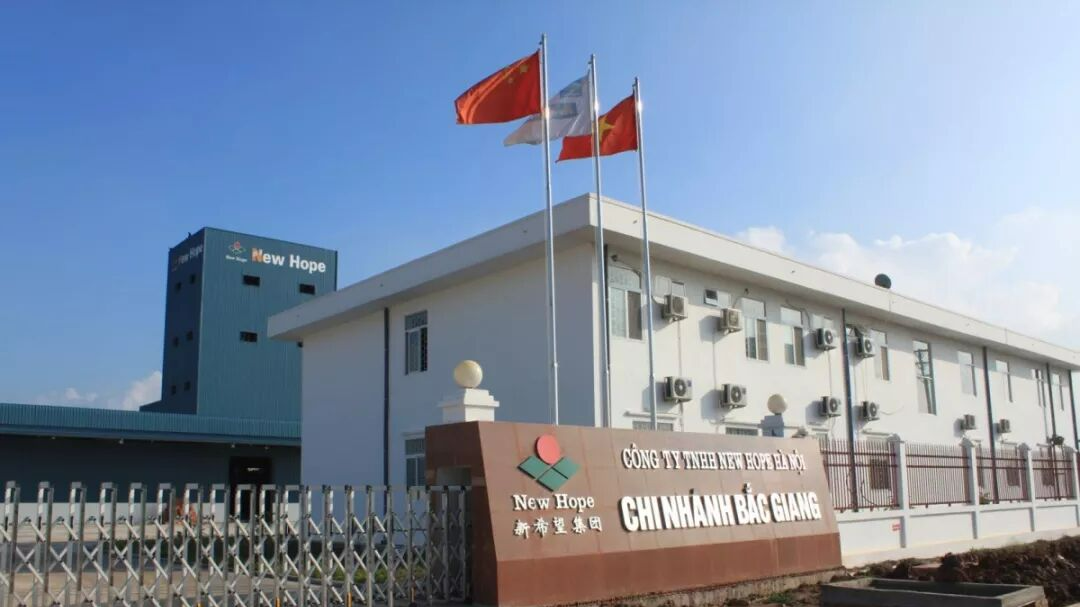
New Hope has previously said it wants overseas feed volume to reach 10 million tonnes around 2030. In the near term, it expects 2026 overseas sales to increase by more than 1 million tonnes compared with 2025.
Regionally, the company said it will remain focused on its existing footprint in 14 countries — especially key markets including Vietnam, Indonesia, Egypt, the Philippines, and Bangladesh — prioritising scale and market-share gains while also keeping an eye on profitability.
AgriPost.CN – Your Second Brain in China’s Agri-food Industry, Empowering Global Collaborations in the Animal Protein Sector.