
Wens says China’s yellow-feathered broiler market is often underestimated and demand has not dropped much; consumption is rising with better eating-quality preferences and more product formats. In 2025, yellow and white broiler output/marketings both grew about 6%, and Wens is pushing breeding upgrades, branding, and overseas expansion, starting with broilers.
Wens says a common industry narrative about China’s “yellow broiler” segment may be missing key pieces.
During a recent visit by institutional investors, the company argued that the production capacity and market demand for Chinese indigenous chicken — typically referred to as yellow-feathered broilers — “have not declined by much,” despite widespread claims that the segment is losing share under pressure from white broilers and other breeds.
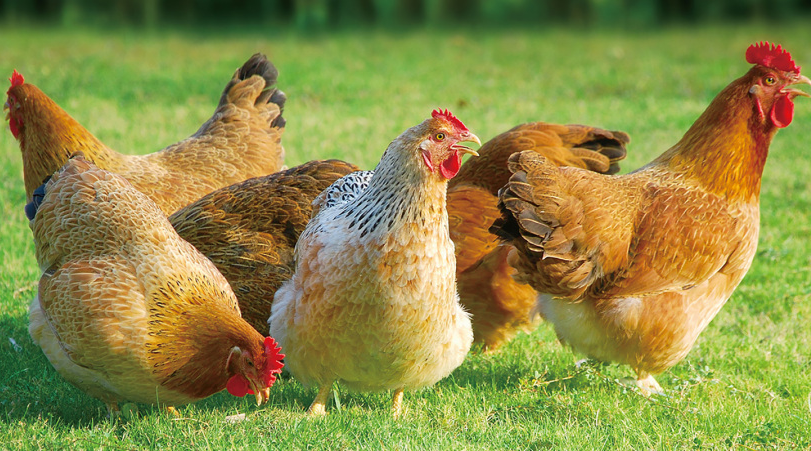
Where the “misunderstanding” comes from
Wens pointed to three main reasons:
First, it said the “grain-saving” narrative has led some to assume white broilers are the most feed-efficient option and therefore represent the future — while underestimating consumers’ continued, and growing, focus on eating quality.
Second, Wens argued the white-broiler supply chain is easier to quantify. With a relatively standardised breeding structure, the number of birds imported for breeding can be used to infer commercial placements and marketings/output. By contrast, China’s yellow-broiler segment includes many breeds, with Grandparent Stock (GP) and Parent Stock (PS) often sourced from domestic breeding programmes. That makes inventories hard to measure precisely, and industry statistics may rely largely on self-reported commercial output, which Wens believes can lead to undercounting.
Third, the company said yellow broilers have increasingly diversified into new product formats in recent years — including refined cuts and portioned products — which can stimulate consumption, but may not be fully captured in existing statistics.
“Overall, based on our observations, we believe consumption of Chinese indigenous chicken is growing year by year, driven by consumers’ pursuit of better quality of life,” the company said.
Output growth in both segments
Data from an expert group under China’s Ministry of Agriculture and Rural Affairs (MARA) meat-chicken monitoring and early warning system shows that in 2025, China’s slaughter numbers for yellow broilers and white broilers were about 3.54 billion birds and 9.57 billion birds, respectively, with both up about 6% year on year. Wens noted that only a few years earlier, the two categories were nearly level.
Among the leading yellow-broiler companies, Wens reported 2025 sales of 1.303 billion meat chickens (including live birds, chilled/fresh products, and cooked products), up 7.87% year on year. Lihua reported sales of 567 million meat chickens (including live birds, slaughter products, and and cooked products), up 9.88%.
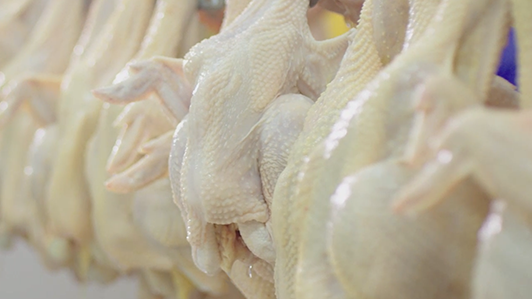
Three breeding priorities for yellow broilers
Looking ahead, Wens said it will push its Chinese indigenous chicken breeding work across three dimensions.
One is to support China’s “one county, one product” strategy. The company said it plans to build on local indigenous chicken resources, using modern crossbreeding to improve production performance — such as laying rate, feed conversion ratio (FCR), and survival rate — to address what it described as the long-standing pain point of “great flavour but low efficiency,” and to help develop regional specialty industries.
A second focus is to develop indigenous chicken breeds better suited to industrial-scale slaughter. Wens said it aims to retain the flavour and quality associated with Chinese indigenous chicken, while improving feed efficiency, growth uniformity, and processing suitability to better fit modern food processing and cold-chain distribution systems.
Third, Wens said it plans to create its own premium indigenous chicken brand, combining breed development, product quality, and branding to build a highly recognisable “Wens Chinese indigenous chicken” image, attract mid- to high-end consumers, and move from “selling products” to “selling a brand.”
“Rebuilding a new Wens”
In the same investor discussions, Wens’ management team — including President Li Shaosong — emphasised the company’s strategic direction and its mid- to long-term goal of “rebuilding a new Wens” through high-quality development.

Li Shaosong
On growth, the company said its pig business will look to improve breeding performance, expand piglet sales, and develop premium black-pig varieties to drive diversified growth. In poultry, Wens said it will accelerate its shift toward ingredients and food products, increase strategic investment in white broilers, and actively explore overseas markets for new growth opportunities. It also highlighted the role of its “Wens Investment” platform in building an industry-chain ecosystem, integrating high-quality resources, and supporting partners.
On profitability, Wens said it will keep pushing down pig production costs through stronger breeding, deeper digitalisation, and better operating efficiency to reinforce its cost advantage. In poultry, it said priorities include a “short-chain reform” — shortening distribution links to reach end customers more directly — stronger marketing for its Chinese indigenous chicken brand, and faster progress in its food-ingredients and food-products transformation, with the aim of lifting profit per bird.
Wens also said it will significantly increase R&D investment, targeting frontier areas including livestock and poultry breeding, digital farming, and precision feed nutrition. It added that it will benchmark strong industrial companies and advance refined management to reduce waste and improve operating effectiveness.

On sustainability, the company said it will pursue green development, explore low-carbon and circular-economy models, strengthen ESG governance, and enhance risk resilience to support steady, sustainable development.
“These strategic goals have been broken down into specific tasks across business lines, forming an executable and trackable implementation path,” Wens said. “The future Wens will be a growing, technology-driven, green, responsible, high-quality new Wens.”
Overseas push starts with broilers
On international expansion, Wens said its board has reached consensus on globalisation, with “going overseas” designated as a key strategic direction and a dedicated exploration team established.
Drawing on years of overseas experience and channel resources across its animal health, agricultural and livestock equipment, and environmental protection businesses, the company said it will prioritise overseas expansion of its meat chicken business, and later extend to pigs, ducks, and other areas.
Wens said it has recently held initial contacts with companies or government departments in Vietnam, Malaysia, India, and South Korea, exploring cooperation models including product trade exports, technology output, and joint-venture facilities, in a bid to find a breakthrough in overseas markets. The company said it believes global demand for livestock and poultry products continues to grow and that overseas markets offer broad space and long-term strategic value.
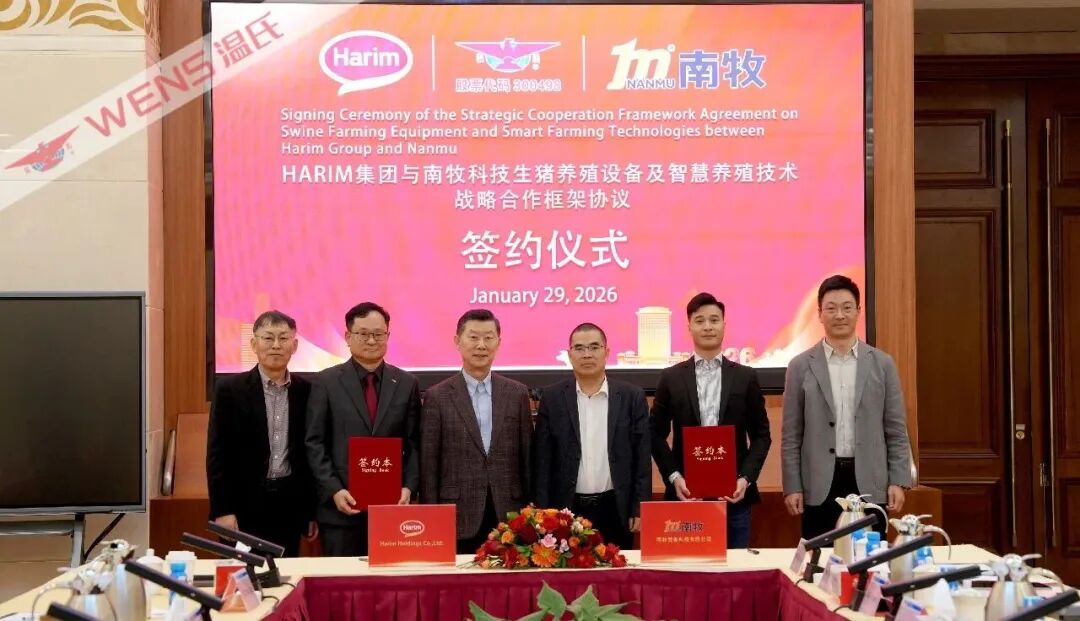
It added that in late January, its subsidiaries Nanmu Technology and Beijing Yingherui signed strategic cooperation agreements with relevant subsidiaries of South Korea’s Harim Group, marking the first step in exporting its intelligent farming and environmental protection technologies.
AgriPost.CN – Your Second Brain in China’s Agri-food Industry, Empowering Global Collaborations in the Animal Protein Sector.