
WePig’s 2025 data report shows China’s sow productivity kept improving: average PSY hit 24.34 in 2025 (+0.31) and is up 6.78 since 2016, while the China–US gap narrowed to 3.22. Performance differences remain stark, mainly driven by NPD and weaned pigs per litter; lactation survival rose to 91.11% and average weaned pigs per litter reached a record 11.25. Sow management also tightened, with lower annual culling and mortality and faster weaning-point removal decisions.
According to the 2025 Pig Industry Data Annual Report released by digital-farm solutions provider WePig, the average PSY (pigs per sow per year) across farms monitored in its system reached 24.34 last year — up 0.31 from the previous year. Since 2016, that’s a cumulative increase of 6.78 piglets per sow per year.
This is WePig’s 10th consecutive annual data report. Over the past decade, the PSY gap between China and the United States has narrowed from 6.56 to 3.22. China’s leading companies have already moved above the US average, but still sit about 5 piglets behind the very top US level.
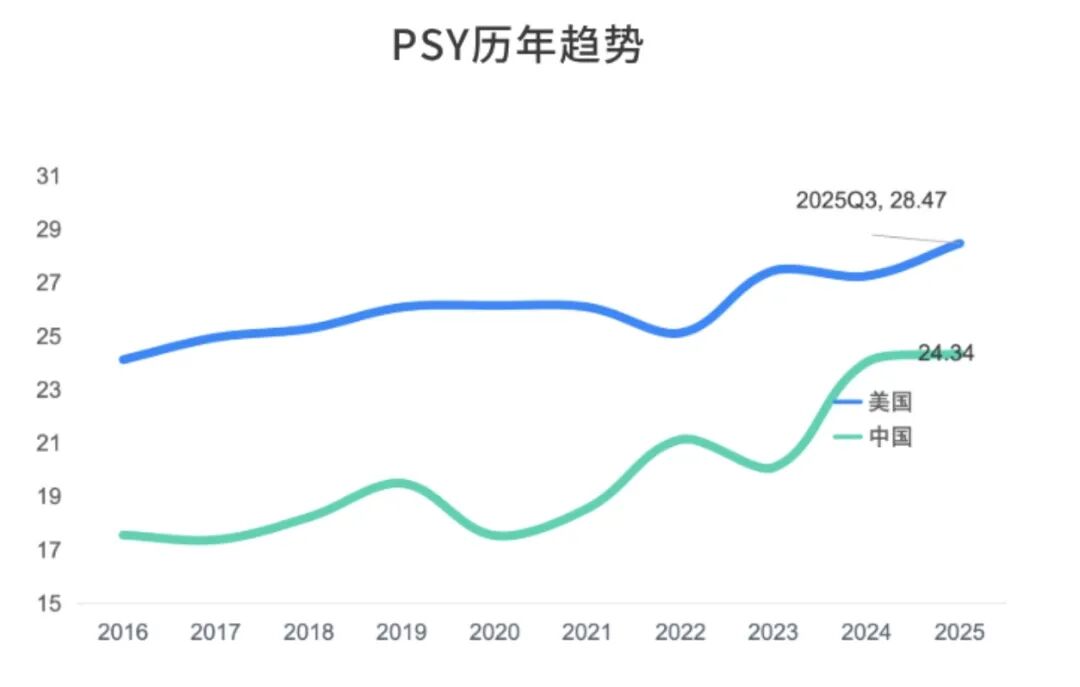
The split: NPD and weaned piglets per litter
WePig points to 2 core drivers behind PSY: NPD (Non-productive days) in breeding sows and litter size at weaning.
On high-performing farms, system optimisation has pushed NPD down to about 25 days, with litters weaning close to 13 piglets. Low-performing farms, by contrast, show a very different picture — NPD exceeding 150 days and fewer than 8 piglets weaned per litter. The “cliff-edge” gap between stages of efficiency is a key reason why the industry is diverging, WePig said.
For 2025, average NPD came in at 48.18 days. Excluding the newly added segment from entry to service through exit, the adjusted NPD was 46.1 days, 0.53 days shorter than in 2024.
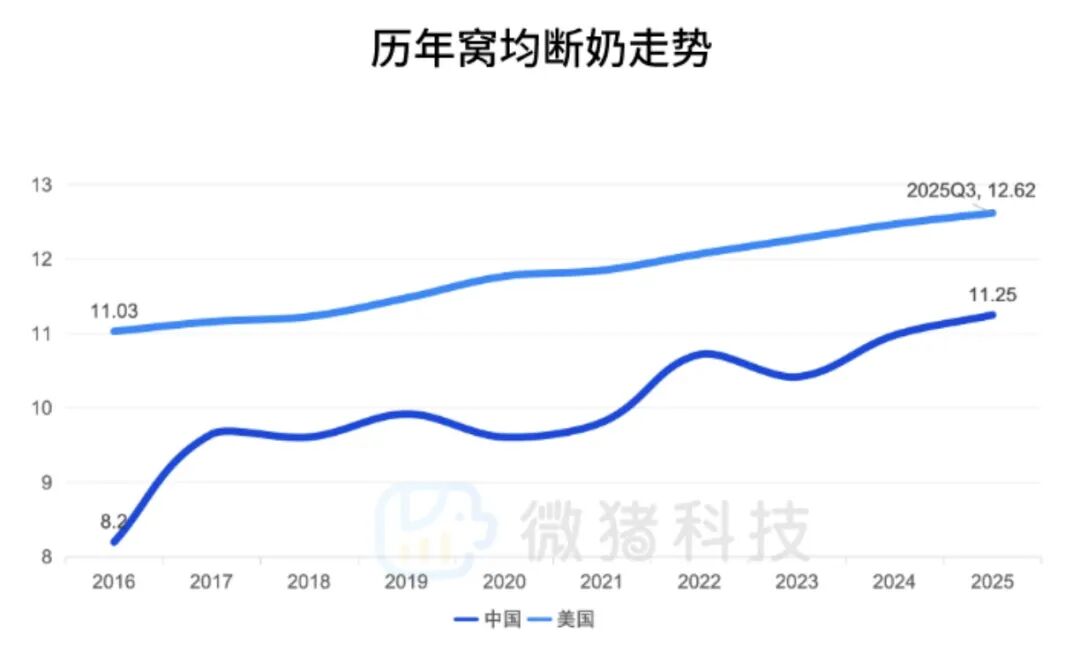
Meanwhile, China’s average litter size at weaning hit a record 11.25 piglets in 2025, up 0.27 year-on-year. WePig attributes the lift mainly to a sharp improvement in lactation survival, up 2.31 percentage points to 91.11%. The spread between farms remains wide: top performers reached 95.87%, while the bottom group was at 86.19%.
Looking at parity structure for weaned piglets, 2025 shows a younger profile with a higher share of first-parity sows. Parity 1 accounted for the biggest share of litters (35.13%), and parities 1–2 combined made up more than 58%.
WePig also compared longer-term trends in weaned piglets per litter between China and the US and described two different growth paths: the US rising steadily, while China is catching up in faster steps. The absolute gap has tightened from nearly 3 piglets in 2016 to about 1.4 in 2025.
Sow management shifts: fewer removals, faster decisions
WePig’s annual report also highlights marked progress in sow management efficiency in 2025. Annual culling rate and mortality rate were 34.68% and 3.67%, down 7.64 and 4.2 percentage points versus 2024.
Monthly sow mortality stayed broadly stable throughout the year, ranging from 2.67% to 5.43%, without abnormal swings. Monthly sow culling began fluctuating upward from May through November — a period that broadly aligned with the timing of policy-led capacity regulation in the pig sector.
The average parity at removal for culled-and-dead sows was 3.15, slightly lower than in 2024, suggesting faster turnover. The composition of removals shifted sharply: the share of pregnancy-failure sows among culled-and-dead animals fell from 61.65% to 23.37%, while the share of sows removed at weaning-to-service jumped from 4.39% to 51.32%.
Crucially, the lifetime number of weaned piglets per culled-and-dead sow reached 18.05, up 4.44 year-on-year.
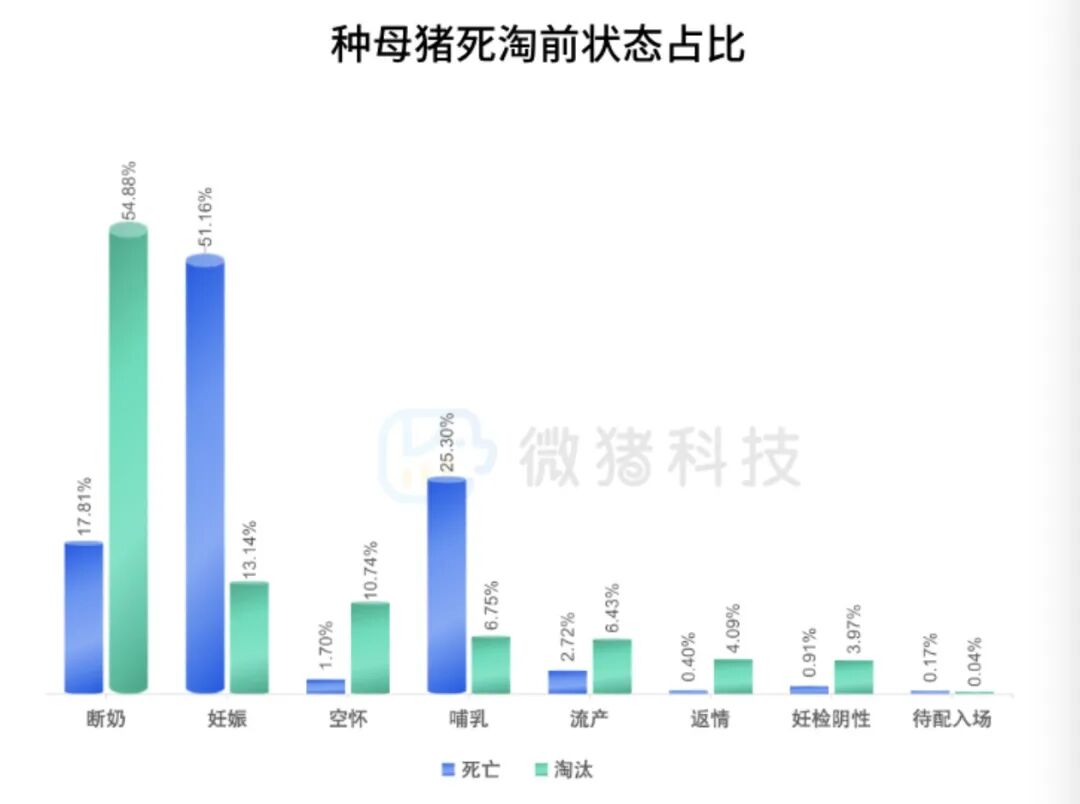
WePig founder Dr Zhang Jia said the decision point is moving from “empty-sow lingering removals” to “immediate evaluation at weaning,” making decisions tighter and more precise. The jump in lifetime weaned piglets per removed sow, Zhang added, suggests removals are becoming more concentrated among low-efficiency individuals.
“Behind the data is a deep adjustment in management strategy,” Zhang said. In his view, the changes helped underpin PSY growth against the backdrop of continued pig price declines — and reflect a broader shift toward improving quality and cutting costs.
AgriPost.CN – Your Second Brain in China’s Agri-food Industry, Empowering Global Collaborations in the Animal Protein Sector.